OER4Schools/Starting the enquiry based learning process: Difference between revisions
| (46 intermediate revisions by 6 users not shown) | |||
| Line 10: | Line 10: | ||
|intention={{ OER4SchoolsWSInfo/intention intro}} | |intention={{ OER4SchoolsWSInfo/intention intro}} | ||
* posing real and productive questions to get the most from enquiry-based learning | * posing real and productive questions to get the most from enquiry-based learning | ||
* different ways to start off an enquiry-based learning lesson ( | * different ways to start off an enquiry-based learning lesson (e.g. brainstorm) | ||
* preparing for an enquiry-based learning session through a series of lessons and a ‘project day’ or ‘field trip’ for maths or science classes | * preparing for an enquiry-based learning session through a series of lessons and a ‘project day’ or ‘field trip’ for maths or science classes | ||
* 4 levels of enquiry involving different amounts of student independence: | * 4 levels of enquiry involving different amounts of student independence: | ||
| Line 38: | Line 38: | ||
= Overview of Enquiry-Based Learning (EBL) = | = Overview of Enquiry-Based Learning (EBL) = | ||
{{activity|otr|: Reading about EBL|10}} The essence of EBL is asking good investigative questions and that the students participate in the planning, researching and presentation of responding to these questions through projects and activities. It may be the case that the field trip activity you have thought about earlier can be a catalyst event for helping students to think about good enquiry questions! | {{activity|otr|: Reading about EBL.|10}} The essence of EBL is asking good investigative questions and that the students participate in the planning, researching and presentation of responding to these questions through projects and activities. It may be the case that the field trip activity you have thought about earlier can be a catalyst event for helping students to think about good enquiry questions! | ||
Teachers can take many approaches to crafting an enquiry-based lesson, but Dr. Cornelia Brunner of the Center for Children and Technology ([http://cct.edc.org/ http://cct.edc.org/]) breaks it into four main parts: Posing Real Questions, Finding Relevant Resources, Interpreting Information and Reporting Findings. | Teachers can take many approaches to crafting an enquiry-based lesson, but Dr. Cornelia Brunner of the Center for Children and Technology ([http://cct.edc.org/ http://cct.edc.org/]) breaks it into four main parts: Posing Real Questions, Finding Relevant Resources, Interpreting Information and Reporting Findings. | ||
| Line 46: | Line 46: | ||
(http://www.youthlearn.org/learning/planning/lesson-planning/how-inquiry/how-inquiry) | (http://www.youthlearn.org/learning/planning/lesson-planning/how-inquiry/how-inquiry) | ||
{{activity|stgw|: discussion in small groups|10}} Get into your previous group of 3-4 teachers again (as in last week’s ‘Planning an outdoor’ activity). Look through the questions in the diagram above in each of the four parts of the enquiry process. Think about how useful they are for the field trip you are planning to organise. | {{activity|stgw|: discussion in small groups.|10}} Get into your previous group of 3-4 teachers again (as in last week’s ‘Planning an outdoor’ activity). Look through the questions in the diagram above in each of the four parts of the enquiry process. Think about how useful they are for the field trip you are planning to organise. | ||
Discuss these questions: | Discuss these questions: | ||
| Line 128: | Line 128: | ||
'''''Surface versus Deep questions:''''' | '''''Surface versus Deep questions:''''' | ||
* ''Surface questions elicit one idea or some ideas. For example, What is the difference between organic and inorganic fertilizers? What is the use | * ''Surface questions elicit one idea or some ideas. For example, What is the difference between organic and inorganic fertilizers? What is the use of carbohydrates in a balanced diet? Which part of the sugar cane plant is used for eating? Which features of a cactus plant are useful for its survival in desert regions?'' | ||
* ''Deep questions elicit relations between ideas and extended ideas. For example, What would happen if only inorganic fertilizers are used for growing plants? What connections do you see between climate of a region and its vegetation? Why is the water in the nearby pond not safe for drinking?'' | * ''Deep questions elicit relations between ideas and extended ideas. For example, What would happen if only inorganic fertilizers are used for growing plants? What connections do you see between climate of a region and its vegetation? Why is the water in the nearby pond not safe for drinking?'' | ||
| Line 149: | Line 149: | ||
* Teacher A: How does light come about? | * Teacher A: How does light come about? | ||
* Teacher B: What kind of process is involved in seeing light? | * Teacher B: What kind of process is involved in seeing light? | ||
* Teacher C: What is the speed of light ? | * Teacher C: What is the speed of light? | ||
* Teacher D: I think the previous question does not lead to a productive discussion since it only has one correct answer, so how about changing it to: ‘How do we find out about the properties of light such as the speed?’ | * Teacher D: I think the previous question does not lead to a productive discussion since it only has one correct answer, so how about changing it to: ‘How do we find out about the properties of light such as the speed?’ | ||
| Line 168: | Line 168: | ||
= Posing real and productive questions - video watching = | = Posing real and productive questions - video watching = | ||
{{activity|otr| on posing real and productive questions|10}} Watch the following clip on Abel trying to get students to understand the relationship of area and perimeter. Pay attention to the questions he posed. | {{activity|otr| on posing real and productive questions|10}} Watch the following clip on Abel trying to get students to understand the relationship of area and perimeter. Pay attention to the questions he posed: | ||
{{:Video/Abel_Clip_2.m4v/reflection}} | |||
{{: Video/Abel Clip 2.m4v }} | {{: Video/Abel Clip 2.m4v }} | ||
| Line 201: | Line 202: | ||
{| style="border-spacing:0;" | {| style="border-spacing:0;" | ||
| style="border:0.035cm solid #000000;padding:0.176cm;"| '''Number of sides?''' | | style="border:0.035cm solid #000000;padding:0.176cm;" | '''Number of sides?''' | ||
| style="border:0.035cm solid #000000;padding:0.176cm;"| '''Sum of interior angles?''' | | style="border:0.035cm solid #000000;padding:0.176cm;" | '''Sum of interior angles?''' | ||
| style="border:0.035cm solid #000000;padding:0.176cm;"| '''Shape? ''' | | style="border:0.035cm solid #000000;padding:0.176cm;" | '''Shape? ''' | ||
| style="border:0.035cm solid #000000;padding:0.176cm;"| '''What do you realise about the pattern?''' | | style="border:0.035cm solid #000000;padding:0.176cm;" | '''What do you realise about the pattern?''' | ||
|- | |- | ||
| style="border:0.035cm solid #000000;padding:0.176cm;"| | | style="border:0.035cm solid #000000;padding:0.176cm;" | | ||
| style="border:0.035cm solid #000000;padding:0.176cm;"| | | style="border:0.035cm solid #000000;padding:0.176cm;" | | ||
| style="border:0.035cm solid #000000;padding:0.176cm;"| | | style="border:0.035cm solid #000000;padding:0.176cm;" | | ||
| style="border:0.035cm solid #000000;padding:0.176cm;"| | | style="border:0.035cm solid #000000;padding:0.176cm;" | | ||
|- | |- | ||
| style="border:0.035cm solid #000000;padding:0.176cm;"| | | style="border:0.035cm solid #000000;padding:0.176cm;" | | ||
| style="border:0.035cm solid #000000;padding:0.176cm;"| | | style="border:0.035cm solid #000000;padding:0.176cm;" | | ||
| style="border:0.035cm solid #000000;padding:0.176cm;"| | | style="border:0.035cm solid #000000;padding:0.176cm;" | | ||
| style="border:0.035cm solid #000000;padding:0.176cm;"| | | style="border:0.035cm solid #000000;padding:0.176cm;" | | ||
|- | |- | ||
| style="border:0.035cm solid #000000;padding:0.176cm;"| | | style="border:0.035cm solid #000000;padding:0.176cm;" | | ||
| style="border:0.035cm solid #000000;padding:0.176cm;"| | | style="border:0.035cm solid #000000;padding:0.176cm;" | | ||
| style="border:0.035cm solid #000000;padding:0.176cm;"| | | style="border:0.035cm solid #000000;padding:0.176cm;" | | ||
| style="border:0.035cm solid #000000;padding:0.176cm;"| | | style="border:0.035cm solid #000000;padding:0.176cm;" | | ||
|- | |- | ||
| style="border:0.035cm solid #000000;padding:0.176cm;"| | | style="border:0.035cm solid #000000;padding:0.176cm;" | | ||
| style="border:0.035cm solid #000000;padding:0.176cm;"| | | style="border:0.035cm solid #000000;padding:0.176cm;" | | ||
| style="border:0.035cm solid #000000;padding:0.176cm;"| | | style="border:0.035cm solid #000000;padding:0.176cm;" | | ||
| style="border:0.035cm solid #000000;padding:0.176cm;"| | | style="border:0.035cm solid #000000;padding:0.176cm;" | | ||
|- | |- | ||
| style="border:0.035cm solid #000000;padding:0.176cm;"| | | style="border:0.035cm solid #000000;padding:0.176cm;" | | ||
| style="border:0.035cm solid #000000;padding:0.176cm;"| | | style="border:0.035cm solid #000000;padding:0.176cm;" | | ||
| style="border:0.035cm solid #000000;padding:0.176cm;"| | | style="border:0.035cm solid #000000;padding:0.176cm;" | | ||
| style="border:0.035cm solid #000000;padding:0.176cm;"| | | style="border:0.035cm solid #000000;padding:0.176cm;" | | ||
|- | |- | ||
| style="border:0.035cm solid #000000;padding:0.176cm;"| | | style="border:0.035cm solid #000000;padding:0.176cm;" | | ||
| style="border:0.035cm solid #000000;padding:0.176cm;"| | | style="border:0.035cm solid #000000;padding:0.176cm;" | | ||
| style="border:0.035cm solid #000000;padding:0.176cm;"| | | style="border:0.035cm solid #000000;padding:0.176cm;" | | ||
| style="border:0.035cm solid #000000;padding:0.176cm;"| | | style="border:0.035cm solid #000000;padding:0.176cm;" | | ||
|} | |} | ||
| Line 309: | Line 310: | ||
#Are the ideas interesting and engaging for my students? | #Are the ideas interesting and engaging for my students? | ||
#Are the ideas relevant to the curriculum? What subject will it be most relevant to introduce them? | #Are the ideas relevant to the curriculum? What subject will it be most relevant to introduce them to? | ||
#What can be an appropriate lesson objective(s) if you do make use of the enquiry ideas? | #What can be an appropriate lesson objective(s) if you do make use of the enquiry ideas? | ||
#What kind of resources will you need and are they easily accessible to you and your students? | #What kind of resources will you need and are they easily accessible to you and your students? | ||
#How will you introduce the ideas in the first lesson (recall what are some of the ways to present your questions that you have learnt in the previous session) and how many lessons do you think you will need to complete the enquiry process? | #How will you introduce the ideas in the first lesson (recall what are some of the ways to present your questions that you have learnt in the previous session) and how many lessons do you think you will need to complete the enquiry process? | ||
== Idea A: Investigating paper airplane design == | |||
[[image: airplane.png|250px]] | [[image: airplane.png|250px]] | ||
There are many different designs of paper aeroplanes. Some of them have a very plain design but can fly a longer distance whereas | There are many different designs of paper aeroplanes. Some of them have a very plain design but can fly a longer distance whereas others can have rather interesting designs but do not fly as well. What are the factors that affect how far a paper airplane can fly? | ||
You may like to refer to the following web references for more information: | You may like to refer to the following web references for more information: | ||
* Examples of airplane designs imitating flying and gliding animals: | * Examples of airplane designs imitating flying and gliding animals: | ||
** http://srel.uga.edu/kidsdoscience/sci-method-planes/airplane-designs.pdf | ** http://srel.uga.edu/outreach/kidsdoscience/sci-method-planes/airplane-designs.pdf | ||
* Examples of airplanes with instructions and videos on how to fold them: | * Examples of airplanes with instructions and videos on how to fold them: | ||
** http://www.funpaperairplanes.com | ** http://www.funpaperairplanes.com | ||
** http://www.origami-resource-center.com/paper-airplane-instructions.html | ** http://www.origami-resource-center.com/paper-airplane-instructions.html | ||
* Examples of the actual lessons on investigating the flights of paper airplanes using scientific method as an extended project: | * Examples of the actual lessons on investigating the flights of paper airplanes using scientific method as an extended project: | ||
** http://camillasenior.homestead.com/paper_airplanes.pdf | ** http://camillasenior.homestead.com/paper_airplanes.pdf | ||
** http://srel.uga.edu/kidsdoscience/kidsdoscience-airplanes.htm | ** http://srel.uga.edu/outreach/kidsdoscience/kidsdoscience-airplanes.htm | ||
''Tip: Students could use what they have learned from their enquiry to design their own enhanced airplane.'' | ''Tip: Students could use what they have learned from their enquiry to design their own enhanced airplane.'' | ||
== Idea B: Investigating the process of hand washing == | |||
[[image: left arm.png|200px]] | [[image: left arm.png|200px]] | ||
| Line 346: | Line 347: | ||
** http://www.youtube.com/watch?v=tmMGwO4N0Vc | ** http://www.youtube.com/watch?v=tmMGwO4N0Vc | ||
* Video of a Zambian teacher doing this enquiry with her students | * Video of a Zambian teacher doing this enquiry with her students | ||
<nowiki> </nowiki>{{: Video/Judith.m4v }} | |||
== Idea C: Investigating the vegetables and trees within our community == | |||
What are some of the vegetables and trees that are grown in our community? Why are they being grown here? (e.g. consider tomatoes, rape, onion, cabbage, nimu tree, holy fiso, malaina, mango) | What are some of the vegetables and trees that are grown in our community? Why are they being grown here? (e.g. consider tomatoes, rape, onion, cabbage, nimu tree, holy fiso, malaina, mango) | ||
| Line 361: | Line 362: | ||
** http://www.greenpop.org/projects/trees-for-zambia/ | ** http://www.greenpop.org/projects/trees-for-zambia/ | ||
* Video of a Zambian teacher doing an enquiry on water retention in different soil types with her students | * Video of a Zambian teacher doing an enquiry on water retention in different soil types with her students | ||
{{: Video/Priscillah_Water_Soil_A04.m4v }} | |||
== Idea D: Planning for a trip to the game reserves and {{nationalpark}} == | |||
[[image: Victoria_Falls.png|600px]] | [[image: Victoria_Falls.png|600px]] | ||
Imagine you have two overseas visitors who have just arrived in | Imagine you have two overseas visitors who have just arrived in {{capital}} and would like to visit a game reserve near {{capital}}, plus the {{nationalpark}} and one other interesting site by car. The two visitors only have one day to visit these three places by car. Can you inform the visitors about the distance to these places from {{capital}} city centre? Can you also suggest an itinerary that will take into consideration the shortest distance of travel to and between the three places, starting and ending at {{capital}} city centre? Please state the distance of travelling to each place and the approximate time required to travel. | ||
Example of website on visiting Zambia: | {{Zambia|Example of website on visiting Zambia: http://www.zambiatourism.com/welcome.htm.}} | ||
{{Kenya|Example of website on visiting Kenya: http://www.touropia.com. }} | |||
Make sure that you do consider the practical arrangements for this trip! In the itinerary: decide on the length of your imaginary journey and work out the travelling time, but also think about the practical arrangements: | Make sure that you do consider the practical arrangements for this trip! In the itinerary: decide on the length of your imaginary journey and work out the travelling time, but also think about the practical arrangements: how much luggage (water, food, equipment) will you need to take and how will you be able to carry this? Are there any elderly people or young children in your party, who might need special provision, such as extra food, or more frequent stops? | ||
== Idea E: Investigating my body and how it works == | |||
Children are naturally curious about how their bodies work so this is a rich area to draw on for enquiry ideas. A simple and straight forward enquiry into pulse rate and how it varies with exercise requires minimal equipment, just a stopwatch (or a clock with a second hand) and some accurate counting. | Children are naturally curious about how their bodies work so this is a rich area to draw on for enquiry ideas. A simple and straight forward enquiry into pulse rate and how it varies with exercise requires minimal equipment, just a stopwatch (or a clock with a second hand) and some accurate counting. Students can come up with different types of exercise such as running on the spot/sprinting/going up and down stairs and see how these affect their pulse rate. They could also look at whether or not their pulse rate is different when they are lying down. | ||
Here are some short videos of Zambian teachers working on an enquiry topic centred around how our bodies work: | Here are some short videos of Zambian teachers working on an enquiry topic centred around how our bodies work: | ||
* lung capacity and how it varies with height/sex/pulse rate/chest circumference {{: Video/Aggie.m4v }} | * lung capacity and how it varies with height/sex/pulse rate/chest circumference | ||
* BMI and being healthy | {{: Video/Aggie lung capacity.m4v }} | ||
* BMI and being healthy | |||
{{: Video/Judith_body_A04.m4v }} | |||
{{Related resources|text= | |||
As well as providing an additional context for enquiry work, this substantial '''TESSA''' resource ''Investigating Distance'' will help you to develop ways of teaching in a more pupil-centred way and contains useful ideas on how to improve your ability to organise, support and assess practical investigations. | |||
Reading through the case studies will be useful when you are developing your own enquiry ideas, especially case study 3 which emphasises the importance of assessing students' prior understanding and ensuring that they have the necessary skills before embarking on an independent enquiry. | |||
[[File: Investigating_distance.pdf]] | |||
}} | |||
= Discussion of Enquiry Ideas = | = Discussion of Enquiry Ideas = | ||
{{ednote|text=This activity is optional if small groups need more time to discuss.}} | {{ednote|text=This activity is optional if small groups need more time to discuss. Also, at this time, draw participants attention to the TESSA resource on investigating distance which can be used as an additional source of information and guidance as we study this unit on enquiry based learning.}} | ||
{{activity|wcd| on enquiry ideas|10}} Nominate one or two representatives from each group to share the enquiry ideas they have discussed in the previous activity. In particular, highlight the reasons for selecting the enquiry ideas that the group has chosen and share ideas on how the teacher should present the enquiry ideas and questions in the first lesson. Share any possible challenges that the teacher may face. The rest of the participants should provide constructive questions or comments to help the group to sharpen their ideas further. | {{activity|wcd| on enquiry ideas|10}} Nominate one or two representatives from each group to share the enquiry ideas they have discussed in the previous activity. In particular, highlight the reasons for selecting the enquiry ideas that the group has chosen and share ideas on how the teacher should present the enquiry ideas and questions in the first lesson. Share any possible challenges that the teacher may face. The rest of the participants should provide constructive questions or comments to help the group to sharpen their ideas further. | ||
| Line 396: | Line 415: | ||
= Follow-up activities = | = Follow-up activities = | ||
{{activity|Agreeing follow up activities|5}} | {{activity|Agreeing follow up activities|5}} | ||
== Part A: Small group planning task. == | |||
Part A: Small group planning task. | |||
Work with the same small group of colleagues to develop the resources (e.g. worksheets and materials) for one or two enquiry ideas that you have discussed just now that will be necessary to carry on the enquiring process by your students. Bring these resources next week (including the materials like the paper for the paper aeroplane) so that you can start the data collection and interpreting process as a group. Remember that you have time to work on at most two enquiry ideas so please choose the idea(s) that you really want to work on! If you think that you have OTHER ideas that you prefer to work on, that is fine but do ensure that you have thought through the questions we have suggested to you earlier. You may find this document useful as it contains some further enquiry ideas that have been developed by students alongside examples of their work: [[file:Developing Higher Order Scientific Enquiry Skills.pdf]] | Work with the same small group of colleagues to develop the resources (e.g. worksheets and materials) for one or two enquiry ideas that you have discussed just now that will be necessary to carry on the enquiring process by your students. Bring these resources next week (including the materials like the paper for the paper aeroplane) so that you can start the data collection and interpreting process as a group. Remember that you have time to work on at most two enquiry ideas so please choose the idea(s) that you really want to work on! If you think that you have OTHER ideas that you prefer to work on, that is fine but do ensure that you have thought through the questions we have suggested to you earlier. You may find this document useful as it contains some further enquiry ideas that have been developed by students alongside examples of their work: [[file:Developing Higher Order Scientific Enquiry Skills.pdf]] | ||
Part B: Developing Internet search skills | == Part B: Developing Internet search skills == | ||
Internet search skills are very important as the internet is typically the first stop to obtaining information on specific news and topics of interest. You may like to direct your students to specific web sites in the early stage of an EBL lesson. | Internet search skills are very important as the internet is typically the first stop to obtaining information on specific news and topics of interest. You may like to direct your students to specific web sites in the early stage of an EBL lesson. | ||
| Line 428: | Line 445: | ||
}} | }} | ||
Part C: Notes for planning 'project or field day' | == Part C: Notes for planning 'project or field day' == | ||
We hope today's session will help you to develop your ideas for an enquiry-based ‘project day’ or ‘field trip’. Be prepared to share any updates of your ideas in the next session (5.3). In the previous session (5.1) , we introduced these questions to help you plan for your own EBL 'field trip' or 'project day' so be sure to refer to them: | We hope today's session will help you to develop your ideas for an enquiry-based ‘project day’ or ‘field trip’. Be prepared to share any updates of your ideas in the next session (5.3). In the previous session (5.1) , we introduced these questions to help you plan for your own EBL 'field trip' or 'project day' so be sure to refer to them: | ||
| Line 443: | Line 460: | ||
{| style="border-spacing:0;" | {| style="border-spacing:0;" | ||
| style="border:0.035cm solid #000000;padding:0.176cm;"| '''‘Open-ended’ Questions''' | | style="border:0.035cm solid #000000;padding:0.176cm;" | '''‘Open-ended’ Questions''' | ||
| style="border:0.035cm solid #000000;padding:0.176cm;"| '''‘Deep’ Questions''' | | style="border:0.035cm solid #000000;padding:0.176cm;" | '''‘Deep’ Questions''' | ||
| style="border:0.035cm solid #000000;padding:0.176cm;"| '''‘Real’ Questions''' | | style="border:0.035cm solid #000000;padding:0.176cm;" | '''‘Real’ Questions''' | ||
| style="border:0.035cm solid #000000;padding:0.176cm;"| '''‘Productive’ Questions''' | | style="border:0.035cm solid #000000;padding:0.176cm;" | '''‘Productive’ Questions''' | ||
|- | |- | ||
| style="border:0.035cm solid #000000;padding:0.176cm;"| Questions have many answers. | | style="border:0.035cm solid #000000;padding:0.176cm;" | Questions have many answers. | ||
| Line 456: | Line 473: | ||
''What could be the consequences of water contamination? How does a balanced diet help us? How could we use flowers of plants? Suggest ways to prevent spread of malaria in your community?'' | ''What could be the consequences of water contamination? How does a balanced diet help us? How could we use flowers of plants? Suggest ways to prevent spread of malaria in your community?'' | ||
| style="border:0.035cm solid #000000;padding:0.176cm;"| Questions elicit relations between ideas and extended ideas. | | style="border:0.035cm solid #000000;padding:0.176cm;" | Questions elicit relations between ideas and extended ideas. | ||
| Line 463: | Line 480: | ||
''What would happen if only inorganic fertilizers are used for growing plants? What connections do you see between climate of a region and its vegetation? Why is the water in the nearby pond not safe for drinking?'' | ''What would happen if only inorganic fertilizers are used for growing plants? What connections do you see between climate of a region and its vegetation? Why is the water in the nearby pond not safe for drinking?'' | ||
| style="border:0.035cm solid #000000;padding:0.176cm;"| Questions that students are curious and very interested to answer or particularly interested to pose (rather than just pursuing what the teachers want them to answer). | | style="border:0.035cm solid #000000;padding:0.176cm;" | Questions that students are curious and very interested to answer or particularly interested to pose (rather than just pursuing what the teachers want them to answer). | ||
''Examples should come from the students themselves!'' | ''Examples should come from the students themselves!'' | ||
| style="border:0.035cm solid #000000;padding:0.176cm;"| Questions help students to delve more deeply into an enquiry area. May be posed by the teacher initially to support and progress students’ enquiries. | | style="border:0.035cm solid #000000;padding:0.176cm;" | Questions help students to delve more deeply into an enquiry area. May be posed by the teacher initially to support and progress students’ enquiries. | ||
Latest revision as of 12:21, 24 November 2015

The OER4Schools Professional Learning Resource
"You can't teach people everything they need to know. The best you can do is position them where they can find what they need to know when they need to know it." Seymour Papert, MIT
Learning intentions and objectives.
In this session you will learn about:
- posing real and productive questions to get the most from enquiry-based learning
- different ways to start off an enquiry-based learning lesson (e.g. brainstorm)
- preparing for an enquiry-based learning session through a series of lessons and a ‘project day’ or ‘field trip’ for maths or science classes
- 4 levels of enquiry involving different amounts of student independence:
- demonstrated enquiry
- structured enquiry
- problem-solving enquiry
- independent enquiry
Success criteria.
To meet the learning intentions you will:
- play a questioning game to practise using open and real questions
- continue to plan a a ‘project day’ or ‘field trip’ taking into account the four main parts of an enquiry based learning lesson:
- posing productive questions
- finding resources/doing an experiment
- interpreting information
- reporting findings
- do a PMI activity on the 4 levels of enquiry
- watch a sequence of videos focusing on the nature of the questions used by the teacher
ICT components.
In this session you will continue to apply the ICT skills you have learnt so far for EBL, and to think about how they help you implement EBL in the classroom.
Review of follow-up activities from last session
If you are running a professional learning programme which follows these sessions in sequence, then you should do the review of follow-up activities relating to the (Category:OER4S CPD). The 'review of follow-up activities' for that session is available, and also shown below in the session text. However, if you are following selected sessions in a different order, then you should use the reflection appropriate to the previous session you did.
The review of the follow-up activities for this session (to be done at the start of the next session) is available here.
There is no review of follow-up activities from last session available. You can go to the previous session () and.
Overview of Enquiry-Based Learning (EBL)
 Observing, thinking, reflecting (10 min): Reading about EBL. The essence of EBL is asking good investigative questions and that the students participate in the planning, researching and presentation of responding to these questions through projects and activities. It may be the case that the field trip activity you have thought about earlier can be a catalyst event for helping students to think about good enquiry questions!
Teachers can take many approaches to crafting an enquiry-based lesson, but Dr. Cornelia Brunner of the Center for Children and Technology (http://cct.edc.org/) breaks it into four main parts: Posing Real Questions, Finding Relevant Resources, Interpreting Information and Reporting Findings.

(http://www.youthlearn.org/learning/planning/lesson-planning/how-inquiry/how-inquiry)
Same-task group work (10 min): discussion in small groups. Get into your previous group of 3-4 teachers again (as in last week’s ‘Planning an outdoor’ activity). Look through the questions in the diagram above in each of the four parts of the enquiry process. Think about how useful they are for the field trip you are planning to organise.
Discuss these questions:
- What questions will you select to use during the field trip? Did you use some of them already in your homework planning task?
- How will you structure the field trip such that students can go through the four main steps of enquiry learning?
- You will realise that for the students to complete the whole process of enquiry, it cannot easily happen within a single lesson! (Although you can do a mini-enquiry in one lesson.) How does this challenge your current thinking and practice of teaching?
The following further set of questions can be useful to help you plan the ‘project’ or ‘field-trip’ day:
- Will there be shared lesson objectives for all the students or would it differ considerably depending on what enquiry task is chosen?
- How will the enquiry tasks support enquiry, questioning, thinking and discussion?
- Will the tasks constitute a project or activity extending over and between lessons? If not, how can this be arranged?
- If so, will students do anything in between lessons? Will this involve research? Will parents/guardians or other family/community members be involved?
- Will the tasks be undertaken by
- individuals (perhaps cooperating by sharing equipment and helping each other with both technical issues and the task) - could enquire as a group but not strictly co-enquiry!
- groups (collaboratively planning and developing ideas, conducting the work, learning to compromise and giving feedback)
- or the whole class working together collaboratively?
- How will students record what they learned?
- If groups, will there be group presentations to the class?
- If groups, will different groups investigate different aspects of the topic and then share their knowledge with the class?
- What criteria will the class use to assess the outcomes of their enquiry? How will you ensure that any criticism is constructive and sensitive? How will the group be encouraged to take on board constructive feedback?
- How will students assess their own work?
Posing Real and Productive Questions
In this section, we introduce the idea that it is important students know what a good enquiry question is and are willing to pose them. We suggest that it is very important for the teachers in the first stage of an enquiry-based lesson to help students to pose real questions and productive questions i.e. questions that are worth answering. Ultimately, these will be questions that when answered will move the student's learning forward and deepen their understanding.
Whole class brainstorm (5 min) on asking questions. Look at the following image and come up with as many enquiry type questions as you can relating to it. (Hint - think about the variables.) Record the questions on the blackboard/on a large piece of paper/on ether pad for use later:

Observing, thinking, reflecting (5 min): posing questions that are worth asking
Real questions are:
- questions that students are curious and very interested to answer or particularly interested to pose (rather than just pursuing what the teachers want them to answer).
- questions that generally do not lead to simple yes/no answers (or just one possible answer). Instead, they are open-ended in nature to stimulate discussion and invite further investigation.
- questions that must ultimately be answerable through enquiry. Questions like "What colour is God?" or "Can I become a national leader?" are valid questions, but they are partially belief-based and not normally subject to the scientific methods that are at the root of enquiry-based learning in the current context. Similarly, questions that are highly personal (that are based on opinion), typically do not lend themselves to an enquiry for science and maths topics. (It is possible in other subjects and require other techniques of enquiry).
Some possible real questions coming from students may be: Why is the colour of the sky blue?, Why is the colour of the sea different at different points of the day in different places?, How do I actually see colours around us? How many soccer balls can fit in our classroom? A sample design task they might engage with is “Design a new school on the same site as yours and for the same number of students as your school.”
Productive questions can be used by the teacher to help students think about a problem in a desired direction. These types of questions are open enough to give opportunities for students to consider new ways of thinking. They usually involve questions like:
- What differences and similarities do you see between these objects (or situations)?
- Why do you think these results are different from the other experiment?
- In your opinion, what would happen if...?
- How do you think you could go about...?
- How might you explain...?
- How can we be sure...?
- How many...?
- What is the temperature...?
The “In your opinion...?” and “What/why do you think...?” are very important here as they do not ask the student for the right answer, rather they ask what the student is thinking. In this way, teachers can progress and support the students’ enquiries. Teachers may use productive questions to help students delve more deeply into their chosen enquiry area with the hope that once students have become open to thinking this way they can begin to ask productive questions of their own.
If teachers decide to give students the option of searching for good enquiry questions, they must help them identify and refine their questions for exploration and help them realise when a question is not appropriate for a given enquiry project. The process of refining questions includes helping students identify what they know and don't know about the subject, identifying sub-questions that may be part of the larger question and, most importantly, formulating hypotheses about what the answer might be at an early stage.
Look back at the list of questions from the brainstorm on the candle with jar over it image and try to classify them using your knowledge of the following question types:
- real
- productive
- closed
- open
- surface
- deep
You may like to help participants to recall their learning on questioning in Session 2.2. The following background text is from that session.
Closed versus Open questions:
- Closed questions are factual and focus on a correct response. Some examples are: Name the different parts of a plant? What are the five nutrients that must be present in a balanced diet? How many sides does a triangle have? What is the formula for calculating perimeter of a square? How many planets are there in the solar system? Name two sources of renewable energy.
- Open questions have many answers. Some examples are: What could be the consequences of water contamination? How does a balanced diet help us? How could we use flowers of plants? Suggest ways to prevent spread of malaria in your community?
Surface versus Deep questions:
- Surface questions elicit one idea or some ideas. For example, What is the difference between organic and inorganic fertilizers? What is the use of carbohydrates in a balanced diet? Which part of the sugar cane plant is used for eating? Which features of a cactus plant are useful for its survival in desert regions?
- Deep questions elicit relations between ideas and extended ideas. For example, What would happen if only inorganic fertilizers are used for growing plants? What connections do you see between climate of a region and its vegetation? Why is the water in the nearby pond not safe for drinking?
‘What if’ and ‘Why’... questions can help you delve deeper into pupils’ thinking.
It is likely that real and productive questions need to be “open” or “deep” as well!
A questioning game
Game (10 min) about real and productive questions. This game is about learning to ask open and real questions. The idea is that you go round your group, and practice questioning.
To start with, decide on a topic to pose questions about to your colleagues. One person starts with an open-ended question that can be either real or productive. The next person could either comment on the previous question (e.g. how can we answer that question? Is it possible to find answers to that question?) or respond with a related open-ended question. This goes on as long as there is no repeating of a previous question. For example, the topic might be on light:
- Teacher A: Why is it important to have light?
- Teacher B : What would happen if there is no light?
- Teacher C: Where/when do you think light is used in particular?
- Teacher D: Who or what do you think particularly need light?
- Teacher E: How does light help or not help people?
- Teacher A: How does light come about?
- Teacher B: What kind of process is involved in seeing light?
- Teacher C: What is the speed of light?
- Teacher D: I think the previous question does not lead to a productive discussion since it only has one correct answer, so how about changing it to: ‘How do we find out about the properties of light such as the speed?’
So now, choose topic, and start asking questions! After you have gone round the group once or twice (depending on the size of the group) you might want to do another round with another topic.
Observing, thinking, reflecting (10 min) on bigger and smaller questions. You will realise that some of the questions are ‘bigger’ than the rest in terms of the possibilities that the question can be ‘broken down’ into ‘smaller’ ones. It is probably easier to respond to the ‘smaller’ sub-questions than the ‘bigger ones’. Therefore, responding to the smaller questions will give clues to answering the bigger questions. Bigger questions might frame a whole enquiry whereas smaller, sub-questions might collectively structure that enquiry.
Examples:
- Why is it important to have light? (‘bigger’ question)
- What would happen if there is no light? (‘smaller’ question)
- Where/when do you think light is used? (‘smaller’ question)
- Who or what do you think particularly need light? (‘smaller’ question)
It will be useful for the questions to be written out on the board so that everyone can see how the questions evolve (and to see the ‘size’ of each question) as each person poses a question.
Highlight to the teachers that such a process of posing, refining and sizing of questions is by itself a useful enquiry activity for students. We are inviting them to pose questions and think about what kind of investigation needs to take place to respond to the questions. It may be the case that some questions seem rather ‘straightforward’ so posing further probing questions like ‘how do you know’ or ‘why do you think so’ will be helpful to further deepen the thinking process of the students.
Posing real and productive questions - video watching
Observing, thinking, reflecting (10 min) on posing real and productive questions Watch the following clip on Abel trying to get students to understand the relationship of area and perimeter. Pay attention to the questions he posed:
- What other questions could be asked to elicit the students' ideas on the concept of area?
- How might a 'think pair share' approach to the class discussion have affected students' learning?
- Consider the question, ‘How do/can we measure area?’. How might this question be developed into a useful enquiry activity for students?
VIDEO
Whole class discussion on the meaning of area
Abel questions students on their knowledge and understanding of the concept of area.
Video/Abel Clip 2.m4v, https://oer.opendeved.net/wiki/Video/Abel_Clip_2.m4v,This video is available on your memory stick in the video/Abel rectangles folder. Duration: 3:08 watch on YouTube, local play / download options / download from dropbox)(Series: Abel rectangles, episode 02)
Continue to watch in the next clip, how Abel set up the class for students to explore the relationship of area and perimeter. What kind of probing questions did he use to help students in their learning?
VIDEO
Instructions for the interactive task
Abel starts with whole class dialogue, giving instructions for starting the investigation. (1:16) Abel then works with one of the groups, clarifying the concepts of area and perimeter, as well as how to work with these in Geogebra. The group is still stuck, and (3:30) Abel solicits helps from other students to help this group, asking them to explain details of Geogebra (relating to perimeter and area). (4:11) Students explore Geogebra through peer learning.
Video/Abel Clip 4.m4v, https://oer.opendeved.net/wiki/Video/Abel_Clip_4.m4v,This video is available on your memory stick in the video/Abel rectangles folder. Duration: 4:32 watch on YouTube, local play / download options / download from dropbox)(Series: Abel rectangles, episode 04)
The next clip shows how the students made use of Geogebra in their enquiry process. How do you think such an approach of learning would be helpful for the students? Do you think it helped them to become more engaged and confident? Why do you think so?
VIDEO
Geogebra group work
A group of students jointly progress on their task to investigate the relationship between area and perimeter of rectangles.
Video/Geogebra-group-interaction.m4v, https://oer.opendeved.net/wiki/Video/Geogebra-group-interaction.m4v,This video is available on your memory stick in the video/Abel rectangles folder. Duration: 2:03 watch on YouTube, local play / download options / download from dropbox)(Series: Abel rectangles, episode 06)
What can you say about how confident the students seem in using this new technology?
Four Levels of Enquiry
Whole class dialogue (5 min) on the four levels of enquiry Read the following examples of teachers trying to start an enquiry-based learning lesson for a maths topic on angles of polygons. According to Douglas Llewellyn, the different approaches of enquiry-based teaching require teachers and students to play different roles in the enquiry-based learning process.
Teacher A: Demonstrated Enquiry
Teacher introduced new concepts of properties of polygons by showing the pupils different pictures of polygons and asking them to describe what they see (see table below). She explained or demonstrated the sum of angles for each polygon. Teacher asked students to explain the pattern across the shapes.
Example of Question: What is the sum of the interior angles of a regular polygon with seven sides based on what I have shown you so far?
Students attempted to answer questions which teacher assessed according to whether responses were correct or incorrect. Students took down notes for the topic. The lesson on this topic ended.

Teacher B: Structured Enquiry
Teacher B divided the class into groups and provided pictures of regular polygons for each group to investigate the property of their angles. The teacher provided step-by-step instruction and questions about how the students should be measuring and recording the angles of each polygon onto a table (see below):
| Number of sides? | Sum of interior angles? | Shape? | What do you realise about the pattern? |
Example of Question: Can you record the number of sides and sum of interior angles of each of the polygon? What kind of pattern can you see?
Teacher assigned roles to each pupil and asked the spokesperson to report on the group’s findings at the end of their investigation – which can take up to one or two days.
Teacher C: Problem-Solving Enquiry
Teacher posed the following problem for the pupils to investigate in groups. She wanted the pupils to think of ways to find out the interior angles of this regular polygon (see picture below) and to search the internet to find out where in the world such a polygon can exist physically as a building structure or object.
Example of Question: You have come across this rather interesting regular polygon and are interested to find out what would be the total interior angles of it. How can you go about finding this out and be sure that the answer is correct? Where do you think you can see this polygon in the real world?

Teacher directed students to some resources that they could search online. Teacher asked students to present their findings at the end of their investigation – which may span across two or three days.
Teacher D: Independent Inquiry
Teacher asked each student to think of ways to find the general formula of the interior angle (S) of a regular n-sided polygon : S = (n −2) × 180°/ n
Example of Question: You have come across several regular polygons. Can you work individually to find out a general formula to find the total interior angles of it up to 100 sides?
Students worked on their own to derive a general formula. Teacher asked students to present their findings at the end of their investigation – which may span across two or three days.
PMI activity on the Four Level of Enquiry
Same-task group work (15 min): PMI activity on the four levels of enquiry. Before having a brief discussion on the differences of the levels of enquiry, it may be helpful to do a PMI (positives, minuses, interesting) activity where you work in groups of two or three and consider the PMIs of each approach. Remember, you can also use a PMI activity to consider the possible pros and cons of a random statement as in the ‘Plants can now walk in our World!’ statement in 5.1.
Do a PMI activity and come up with something Positive about and a Minus point about as well as something Interesting about, in this case, the enquiry levels/approaches used by Teachers A, B, C and D and/or consider the following questions for discussion:
- What do you think are the main differences between the levels of enquiry?
- Where do you see yourself (Teacher A-D?) in terms of conducting an enquiry-based learning activity in your class if you were to teach them today? Why do you say that?
- Do you think there is a possibility that you will consider using a different approach to start an enquiry-based lesson in your class if you are given some time to plan? What and how will you go about trying?
As the facilitator, look closely at what is being suggested as P, M, and Is. Critically discuss whether something suggested is really a minus, or whether it could be a Positive, or perhaps just interesting. You might say: "You have put down that students will be challenged as a minus. Is challenging your students a minus? How do we challenge students appropriately?" Also see where suggestions are similar across the four approaches. You might say: "You suggested that this was a Positive for all four teachers - where do you think this is the biggest Positive?"
Here is one way of organising the PMI activity so that all groups consider all 4 levels of enquiry - as represented by Teachers A to D:
- Place a piece of A4 paper with the title: ‘Teacher A: Demonstrated Enquiry’ on a desk (desk A) in one corner of the room.
- Then place a second piece of paper with the title: ‘Teacher B: Structured Enquiry‘ on a desk (desk B) in another corner of the room.
- A third piece of paper with the title: ‘Teacher C: Problem-Solving Enquiry ‘ should be placed on another desk (desk C) in a different corner.
- In the final corner should be placed a piece of of paper with the title: ‘Teacher D: Independent Inquiry‘ on it (desk D).
- Each group starts on a different desk. They will read through the enquiry approach for that Teacher, have a short discussion about the PMI’s of the Teacher/enquiry approach and write them down before moving on to the next desk in the A,B,C,D sequence (so A moves to B, B moves to C etc.).
After the first move, there will already be something positive (P), something negative (M) and an interesting point (I) written on the paper now in front of each group. If there are only three groups, the group starting at desk C and moving on to desk D will be greeted with another blank piece of paper Each group will read through the enquiry approach for that Teacher but they will have to think more deeply about their PMIs, moving beyond the obvious (so, they should not repeat what has been written but should extend their thinking, perhaps using those ideas). The third group to arrive at that desk will hopefully be able to use the other groups ideas to delve even deeper. By perpetuating this cycle all groups will get to discuss each of the Teachers with an increasing level of challenge to their thinking.
At the end of the activity, the four pieces of paper could be displayed so that everyone can see what has been written. Another discussion may arise out of this process, but that’s enquiry for you!
Another way to do this activity is to move the pieces of A4 paper from group to group. This works well if there are the same number of groups as pieces of paper - Groups each choose from Teachers A, B, C or D, feedback one PMI related to their choice, and then pass their chosen teacher (piece of paper) on for the next group to consider. The next group must come up with a different PMI for that same Teacher. By the end of the activity each of A, B, C and D should have 4 PMI comments. The feedback comments could be written on the board by the facilitator for ongoing discussion or written on the piece of A4 paper and passed on.
There is no single correct way to teach or to conduct an enquiry. Effective teachers are resourceful and have a whole repertoire of teaching strategies which they draw on as appropriate, according to the topic, task, level of student confidence and knowledge. The diagram below shows how levels of teacher support and student independence might vary.

The differences between the approaches of the four teachers can be understood based on differing levels of teacher support or scaffolding (maximum for teacher A) for the students and students’ independence in their learning (maximum for teacher D). While we hope that we can help our students to take up more responsibility and ownership through enquiry-based learning, we trust that the teachers can make appropriate decisions on which level of support or scaffolding is best suited for their students at any point. One thing that can be common across the approaches is that a teacher should always strive to be a co-learner with the students and not assume that he/she already has all the answers. Be prepared for surprises and that the students’ questions and findings might be very illuminating indeed!
Making use of Enquiry Ideas


Same-task group work (10 min) on making use of enquiry ideas Below are five enquiry ideas (A-E) that could be turned into an enquiry in your class. Please note that these are just enquiry ideas which means that you need to go through substantial thinking and planning for the ideas to be introduced in a lesson to engage students in their own enquiry. It may be that you do not find some of the ideas useful at all, in which case you are welcome to come up with your own enquiry ideas to discuss as a group.
Divide yourself into groups of three or four teachers. You should read through all the enquiry ideas and eventually pick one or two ideas for the group activity that you will be working on together in this session and in the next two weeks. As you are reading through these ideas, think about the following:
- Are the ideas interesting and engaging for my students?
- Are the ideas relevant to the curriculum? What subject will it be most relevant to introduce them to?
- What can be an appropriate lesson objective(s) if you do make use of the enquiry ideas?
- What kind of resources will you need and are they easily accessible to you and your students?
- How will you introduce the ideas in the first lesson (recall what are some of the ways to present your questions that you have learnt in the previous session) and how many lessons do you think you will need to complete the enquiry process?
Idea A: Investigating paper airplane design

There are many different designs of paper aeroplanes. Some of them have a very plain design but can fly a longer distance whereas others can have rather interesting designs but do not fly as well. What are the factors that affect how far a paper airplane can fly?
You may like to refer to the following web references for more information:
- Examples of airplane designs imitating flying and gliding animals:
- Examples of airplanes with instructions and videos on how to fold them:
- Examples of the actual lessons on investigating the flights of paper airplanes using scientific method as an extended project:
Tip: Students could use what they have learned from their enquiry to design their own enhanced airplane.
Idea B: Investigating the process of hand washing


We have been told that washing of our hands is an important part of maintaining hygiene and preventing the spread of germs and viruses. How do you know that you have spent adequate time washing your hands each time?
- Example of lesson plan on investigating hand washing
- Example of youtube video on emphasising importance of washing hands
- Video of a Zambian teacher doing this enquiry with her students
VIDEO
Hand washing enquiry
Pupils investigate different methods of hand washing to identity which is the most efficient.
Video/Judith.m4v, https://oer.opendeved.net/wiki/Video/Judith.m4v,This video is available on your memory stick in the video/Judith body folder. Duration: 3:51 watch on YouTube, local play / download options / download from dropbox) (Video filmed in 2012, at CBS.)(Series: Judith body, episode 28)
Idea C: Investigating the vegetables and trees within our community
What are some of the vegetables and trees that are grown in our community? Why are they being grown here? (e.g. consider tomatoes, rape, onion, cabbage, nimu tree, holy fiso, malaina, mango)
Some possible areas of investigation: location of vegetable/trees (e.g. type of soil and availability of water source like a stream), medicinal properties (e.g. is it used as a traditional medicine?), nutritional properties, economic consideration (e.g. source of fuel/income), ecological and environmental concerns, personal and spiritual values. You might like to select one or two areas of investigation for a start.
- Example of youtube video on tree planting in Zambia
- Example of website on ‘treevolution’ in Zambia
- Video of a Zambian teacher doing an enquiry on water retention in different soil types with her students
VIDEO
Soil water retention lesson
Priscillah's class explore the water retention properties of soil types
Video/Priscillah Water Soil A04.m4v, https://oer.opendeved.net/wiki/Video/Priscillah_Water_Soil_A04.m4v,This video is available on your memory stick in the video/Priscillah Water Soil folder. Duration: 2:54 watch on YouTube, local play / download options / download from dropbox) (Video filmed in 2012, at CBS.)(Series: Priscillah Water Soil, episode 04)
Idea D: Planning for a trip to the game reserves and a national park[-]Victoria Falls[Z]Masaai Mara[K]Akagera National Park[R]Outamba-Kilimi National Park[S]Bwindi Impenetrable National Park[U]Mole National Park[G]

Imagine you have two overseas visitors who have just arrived in the capital[-]Lusaka[Z]Nairobi[K]Kigali[R]Freetown[S]Kampala[U]Accra[G] and would like to visit a game reserve near the capital[-]Lusaka[Z]Nairobi[K]Kigali[R]Freetown[S]Kampala[U]Accra[G], plus the a national park[-]Victoria Falls[Z]Masaai Mara[K]Akagera National Park[R]Outamba-Kilimi National Park[S]Bwindi Impenetrable National Park[U]Mole National Park[G] and one other interesting site by car. The two visitors only have one day to visit these three places by car. Can you inform the visitors about the distance to these places from the capital[-]Lusaka[Z]Nairobi[K]Kigali[R]Freetown[S]Kampala[U]Accra[G] city centre? Can you also suggest an itinerary that will take into consideration the shortest distance of travel to and between the three places, starting and ending at the capital[-]Lusaka[Z]Nairobi[K]Kigali[R]Freetown[S]Kampala[U]Accra[G] city centre? Please state the distance of travelling to each place and the approximate time required to travel.
Example of website on visiting Zambia: http://www.zambiatourism.com/welcome.htm.[Z] Example of website on visiting Kenya: http://www.touropia.com. [K]
Make sure that you do consider the practical arrangements for this trip! In the itinerary: decide on the length of your imaginary journey and work out the travelling time, but also think about the practical arrangements: how much luggage (water, food, equipment) will you need to take and how will you be able to carry this? Are there any elderly people or young children in your party, who might need special provision, such as extra food, or more frequent stops?
Idea E: Investigating my body and how it works
Children are naturally curious about how their bodies work so this is a rich area to draw on for enquiry ideas. A simple and straight forward enquiry into pulse rate and how it varies with exercise requires minimal equipment, just a stopwatch (or a clock with a second hand) and some accurate counting. Students can come up with different types of exercise such as running on the spot/sprinting/going up and down stairs and see how these affect their pulse rate. They could also look at whether or not their pulse rate is different when they are lying down.
Here are some short videos of Zambian teachers working on an enquiry topic centred around how our bodies work:
- lung capacity and how it varies with height/sex/pulse rate/chest circumference
VIDEO
Aggie and class explore lung capacity with a hands-on demonstration using a water bottle
Aggie and her class explore lung capacity and how it varies with height/sex/pulse rate/chest circumference.
Video/Aggie lung capacity.m4v, https://oer.opendeved.net/wiki/Video/Aggie_lung_capacity.m4v,This video is available on your memory stick in the video/Aggie Fitness folder. Duration: 1:47 watch on YouTube, local play / download options / download from dropbox) (Video filmed in 2012, at CBS.)(Series: Aggie Fitness, episode 01)
- BMI and being healthy
VIDEO
How to use height and weight data to calculate BMI
Judith reiterates the importance of accurate data collection and shows pupils, on the board, how to calculate their BMI. Pupils stick measuring tapes to the wall in preparation for measuring their height.
Video/Judith body A04.m4v, https://oer.opendeved.net/wiki/Video/Judith_body_A04.m4v,This video is available on your memory stick in the video/Judith body folder. Duration: 14:01 watch on YouTube, local play / download options / download from dropbox) (Video filmed in 2012, at CBS.)(Series: Judith body, episode 04)
As well as providing an additional context for enquiry work, this substantial TESSA resource Investigating Distance will help you to develop ways of teaching in a more pupil-centred way and contains useful ideas on how to improve your ability to organise, support and assess practical investigations.
Reading through the case studies will be useful when you are developing your own enquiry ideas, especially case study 3 which emphasises the importance of assessing students' prior understanding and ensuring that they have the necessary skills before embarking on an independent enquiry.

Discussion of Enquiry Ideas
This activity is optional if small groups need more time to discuss. Also, at this time, draw participants attention to the TESSA resource on investigating distance which can be used as an additional source of information and guidance as we study this unit on enquiry based learning.
Whole class dialogue (10 min) on enquiry ideas Nominate one or two representatives from each group to share the enquiry ideas they have discussed in the previous activity. In particular, highlight the reasons for selecting the enquiry ideas that the group has chosen and share ideas on how the teacher should present the enquiry ideas and questions in the first lesson. Share any possible challenges that the teacher may face. The rest of the participants should provide constructive questions or comments to help the group to sharpen their ideas further.
ICT practice: Making use of ICT in enquiry-based learning
Different-tasks group work (20 min) with ICT for EBL. You now have acquired a large range of ICT skills (images, slideshows, the browser, GeoGebra, spreadsheets, Etherpad for collaborative writing, concept mapping, online simulations, typing). You've also had the opportunity to deepen your knowledge and skills within one particular application. We now turn towards using these applications for EBL.
Think about all the applications you have encountered. How can you use those applications in EBL? Think about the concrete projects that you have developed with these applications and consider:
- the level of enquiry they promote
- ways of extending/differentiating the level of enquiry
- how user friendly is it for yourself and students
- how engaging will it be for the students
- the relevance to your teaching subjects or curriculum in general
Continue to develop some new activities for classroom use, bearing in mind the above list. Develop detailed activity plans and share and test your ideas with other participants. As always, try those activities in the classroom.
Connecting with overarching goals of the programme
Open space (10 min). It's now time for the "open space", that gives you an opportunity to discuss issues that have arisen, and to relate those to the broader context of the programme. Do not just gloss over this section, but make time to raise issues, and probe the progress that you are making. You could use this space to:
- Remind yourselves of the of the Most Significant Change Technique, and e.g. collect more of your stories.
- Discuss your assessment portfolios: Is there anything that you are unsure about? Is it going well? What could be done better?
- Check on the work with the classroom assistants: Is this going well? Are there any tensions? Any observations or tips you can share?
- Reviewing individual ICT practise (such as typing practise).
- If you are preparing a presentation for other teachers, you could work on the presentation (about what you have been learning, stories emerging from MSC).
- Remind those who are doing audio diaries, to upload them.
- You could discuss any other issues that have arisen.
You will find notes and summaries of various techniques and concepts on our reference page, and you might want to refer to those for clarification during this activity if needed.
Follow-up activities
Agreeing follow-up activities (5 min).
Part A: Small group planning task.
Work with the same small group of colleagues to develop the resources (e.g. worksheets and materials) for one or two enquiry ideas that you have discussed just now that will be necessary to carry on the enquiring process by your students. Bring these resources next week (including the materials like the paper for the paper aeroplane) so that you can start the data collection and interpreting process as a group. Remember that you have time to work on at most two enquiry ideas so please choose the idea(s) that you really want to work on! If you think that you have OTHER ideas that you prefer to work on, that is fine but do ensure that you have thought through the questions we have suggested to you earlier. You may find this document useful as it contains some further enquiry ideas that have been developed by students alongside examples of their work: 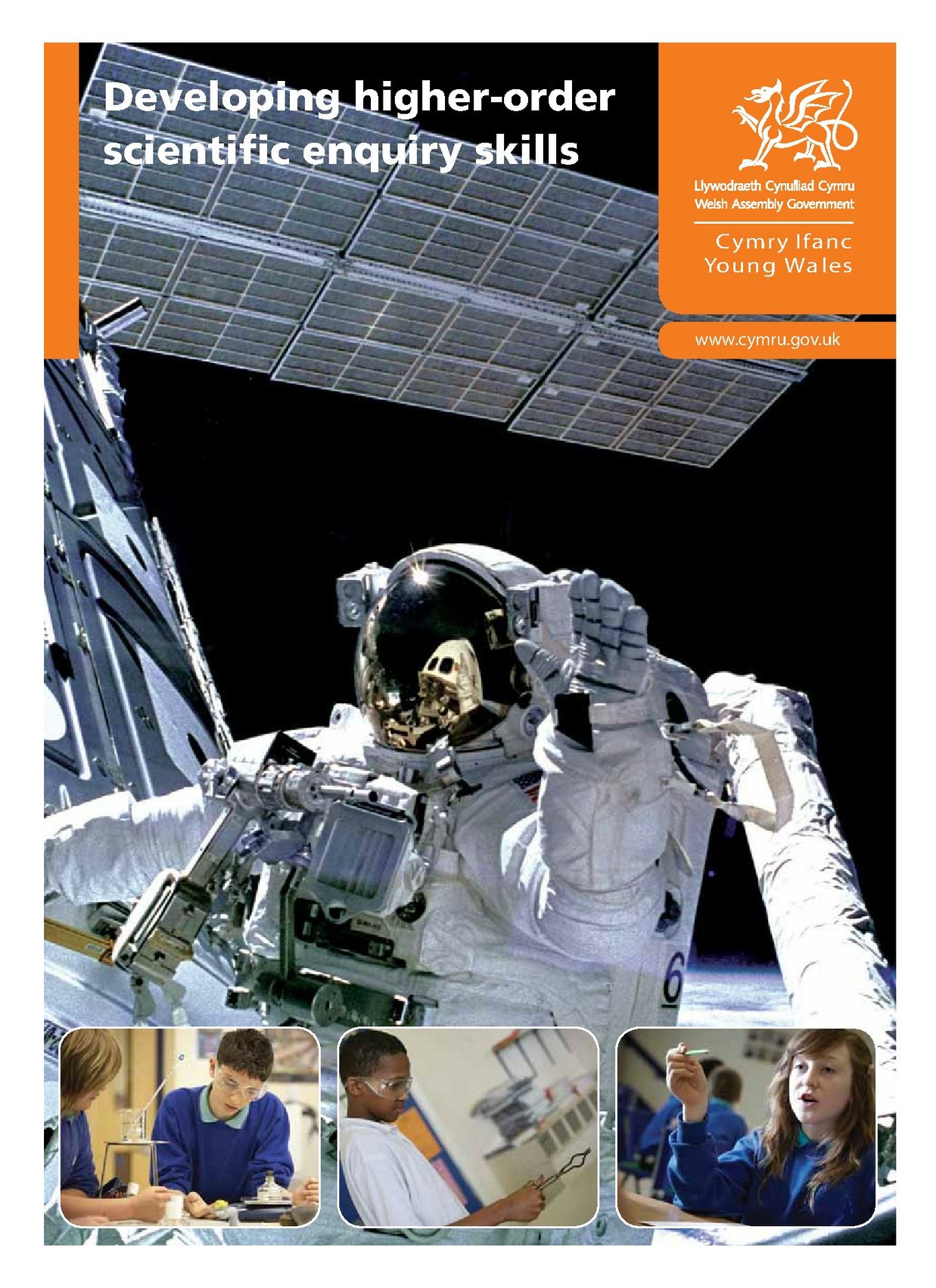
Part B: Developing Internet search skills
Internet search skills are very important as the internet is typically the first stop to obtaining information on specific news and topics of interest. You may like to direct your students to specific web sites in the early stage of an EBL lesson.
We suggest that you spend some time viewing the following YouTube clips on internet search skills. This can also be done as a group session using a projector, if preferred.
VIDEO
Skimming and scanning the internet
Youtube clip on skimming and scanning the internet.
Video/How to scan and skim sources on the Internet.mp4, https://oer.opendeved.net/wiki/Video/How_to_scan_and_skim_sources_on_the_Internet.mp4,This video is available on your memory stick in the video/Video from other organisations folder. Duration: 01:34 watch on YouTube, local play / download options / download from dropbox) Video courtesy of Fusion universal.(Series: Video from other organisations, episode N/A)
VIDEO
Search the internet effectively
Learn how to search the Internet effectively
Video/Learn how to search the Internet effectively.mp4, https://oer.opendeved.net/wiki/Video/Learn_how_to_search_the_Internet_effectively.mp4,This video is available on your memory stick in the video/Video from other organisations folder. Duration: 01:59 watch on YouTube, local play / download options / download from dropbox) Video courtesy of Fusion universal.(Series: Video from other organisations, episode N/A)
VIDEO
Learn how to use Google expert
Learn how to use Google expert search
Video/Learn how to use Google expert search.mp4, https://oer.opendeved.net/wiki/Video/Learn_how_to_use_Google_expert_search.mp4,This video is available on your memory stick in the video/Video from other organisations folder. Duration: 01:44 watch on YouTube, local play / download options / download from dropbox) Video courtesy of Fusion universal.(Series: Video from other organisations, episode N/A)
VIDEO
Google Earth in the classroom
How to use Google Earth in the classroom
Video/How to use Google Earth in the classroom.mp4, https://oer.opendeved.net/wiki/Video/How_to_use_Google_Earth_in_the_classroom.mp4,This video is available on your memory stick in the video/Video from other organisations folder. Duration: 01:12 watch on YouTube, local play / download options / download from dropbox) Video courtesy of Fusion universal.(Series: Video from other organisations, episode N/A)
After you have looked at the video clips above, please try to search for a video clip on the internet on Enquiry-based learning & OER use at the Aisha Project School, Zambia. Can you summarise what the teacher in the clip has said about enquiry-based learning through the use of ICT?
When you discuss the homework with the participants, let them know that they can ask you for help in navigating to this site if they have difficulty finding the clip. The clip can be found at http://vimeo.com/12669204 (and is available offline as Enquiry-based learning at Aisha Project School.mp4).
The clip shows Andreia Santos (http://aisantos.wordpress.com) interviewing Brighton Lubasi about the use of open educational resources at the Aisha Project School in Lusaka, Zambia. Brighton explained how they drew on an enquiry-based pedagogy for learning with OER. The interview was carried out during Andreia's visit to Zambia to attend and present at the E-learning Africa Conference in May 2010.
Part C: Notes for planning 'project or field day'
We hope today's session will help you to develop your ideas for an enquiry-based ‘project day’ or ‘field trip’. Be prepared to share any updates of your ideas in the next session (5.3). In the previous session (5.1) , we introduced these questions to help you plan for your own EBL 'field trip' or 'project day' so be sure to refer to them:
- What is a suitable topic?
- What is a suitable lesson objective/success criteria?
- Where would be a suitable venue for the event?
- What kind of questions could you pose during the enquiry? Is there a main enquiry question and sub-questions? Can you phrase some sample questions that ask learners what they know/think about some aspects of your chosen topic? Are you giving opportunity for the students to pose their own questions? What might they like to know/find out?
- What specific resources (e.g. worksheets, objects, internet links) have you come up with for the event?
- How can the students make use of ICT to facilitate their enquiry process?
- Consider also what are some administrative requirements you need to attend to organise such an event (e.g. Do you need permission from an authority/parents? Do you need to invite a specialist speaker to talk about the topic?
The table below summarises the different kind of questions that we have discussed so far.
| ‘Open-ended’ Questions | ‘Deep’ Questions | ‘Real’ Questions | ‘Productive’ Questions |
| Questions have many answers.
|
Questions elicit relations between ideas and extended ideas.
|
Questions that students are curious and very interested to answer or particularly interested to pose (rather than just pursuing what the teachers want them to answer).
|
Questions help students to delve more deeply into an enquiry area. May be posed by the teacher initially to support and progress students’ enquiries.
|
In the next session, these follow-up activities will be reviewed. If you are using this session on its own, you can have a look at the review of follow-up activities here.
References
- Pollard, A., Anderson, J.,Maddock, M.,Swaffield, S., Warin, J., Warwick, P., 2002. Reflective teaching: Effective and evidence‐informed professional practice, London: Continuum.
- Llewellyn, D. 2011. Differentiated Science Inquiry, Thousand Oaks CA: Corwin.
Acknowledgements
We thank YouthLearn Initiative at Education Development Center (http://www.youthlearn.org/learning/planning/lesson-planning/how-inquiry/how-inquiry inquiry) and Futurelab (http://www.enquiringminds.org.uk/terms_of_use/) for kindly allowing us to use the material from their website.
At the end of each session, we provide an overview of the activities in this session, together with their suggested timings. Although this appears at the end of the session (for technical reasons), you should keep an eye on this throughout the session, to make sure that you are pacing the workshop session appropriately!
Total time: 135 (min)
Activities in this session:
- Observing, thinking, reflecting (10 min): Reading about EBL.
- Same-task group work (10 min): discussion in small groups.
- Whole class brainstorm (5 min) on asking questions.
- Observing, thinking, reflecting (5 min): posing questions that are worth asking
- Game (10 min) about real and productive questions.
- Observing, thinking, reflecting (10 min) on bigger and smaller questions.
- Observing, thinking, reflecting (10 min) on posing real and productive questions
- Whole class dialogue (5 min) on the four levels of enquiry
- Same-task group work (15 min): PMI activity on the four levels of enquiry.
- Same-task group work (10 min) on making use of enquiry ideas
- Whole class dialogue (10 min) on enquiry ideas
- Different-tasks group work (20 min) with ICT for EBL.
- Open space(10 min).
- Agreeing follow-up activities(5 min).
If you have printed this session for offline use, you may also need to download the following assets:
- Video/Abel Clip 2.m4v (local play / download options / download from dropbox)
- Video/Abel Clip 4.m4v (local play / download options / download from dropbox)
- Video/Geogebra-group-interaction.m4v (local play / download options / download from dropbox)
- Video/Judith.m4v (local play / download options / download from dropbox)
- Video/Priscillah Water Soil A04.m4v (local play / download options / download from dropbox)
- Video/Aggie lung capacity.m4v (local play / download options / download from dropbox)
- Video/Judith body A04.m4v (local play / download options / download from dropbox)
- Video/How to scan and skim sources on the Internet.mp4 (local play / download options / download from dropbox)
- Video/Learn how to search the Internet effectively.mp4 (local play / download options / download from dropbox)
- Video/Learn how to use Google expert search.mp4 (local play / download options / download from dropbox)
- Video/How to use Google Earth in the classroom.mp4 (local play / download options / download from dropbox)


