Teaching Approaches/Whole class: Difference between revisions
SimonKnight (talk | contribs) No edit summary |
SimonKnight (talk | contribs) m (SimonKnight moved page Teaching Approaches/Whole Class to Teaching Approaches/Whole class) |
||
| (5 intermediate revisions by the same user not shown) | |||
| Line 1: | Line 1: | ||
{{teaching approach header}} | |||
== Working With Whole-Classes == | == Working With Whole-Classes == | ||
{{adaptedfrom|Purposes and characteristics of whole-class dialogue|WholeClassIntro|A great deal of teaching is unavoidably a passing on of information and skills. However, it benefits from being complemented by classroom talk that is organised very differently for specific curriculum purposes. It is this 'something else' to which whole- class dialogue contributes, provided it goes well beyond those class discussions which involve few departures from teacher direction and little reduction in teacher talk.<sup>2</sup> It replaces the usual hunt for answers which the teacher already knows into collaborative searches for solutions or understanding. It blurs those sharp boundaries around school knowledge that largely exclude reference to what pupils know unless they have already been taught it, or at least screens such references for educational relevance. It can provide more opportunities for learners to talk their way into understanding rather than receiving, more and less effectively an already defined version of what they are now supposed to know.<sup>3</sup> Dialogue differs from most classroom discussion in so far as the talk is exploratory, that is teacher and pupils see the possibility of conclusions unexpected, and certainly unplanned, when the talk began. | {{adaptedfrom|Purposes and characteristics of whole-class dialogue|WholeClassIntro|A great deal of teaching is unavoidably a passing on of information and skills. However, it benefits from being complemented by classroom talk that is organised very differently for specific curriculum purposes. It is this 'something else' to which whole- class dialogue contributes, provided it goes well beyond those class discussions which involve few departures from teacher direction and little reduction in teacher talk.<sup>2</sup> It replaces the usual hunt for answers which the teacher already knows into collaborative searches for solutions or understanding. It blurs those sharp boundaries around school knowledge that largely exclude reference to what pupils know unless they have already been taught it, or at least screens such references for educational relevance. It can provide more opportunities for learners to talk their way into understanding rather than receiving, more and less effectively an already defined version of what they are now supposed to know.<sup>3</sup> Dialogue differs from most classroom discussion in so far as the talk is exploratory, that is teacher and pupils see the possibility of conclusions unexpected, and certainly unplanned, when the talk began. | ||
| Line 10: | Line 12: | ||
Corresponding demands are made on pupils. They are usually well practised in listening for clues in how the teacher introduces a question and responds to initial answers. Experience may well have taught them that the clues are often so prolific that even a wild guess will lead the teacher to answer the question for them. They may have much less experience of listening to one another. Indeed, the distance between whole-class dialogue and customary classroom talk is wide enough to make explicit rules of engagement helpful so that the differences are seen as deliberate departures. Doing so applies the notion of a distinctive 'speech event' to whole-class dialogue, recognised by the participants as having its own way of contributing appropriately. Notable examples of recommending clear procedural rules designed largely to curb teachers' usual directing role are the Nuffield Humanities Project and the National Oracy Project, both vulnerable to ill-informed attacks as a progressive descent into 'anything goes'. }} | Corresponding demands are made on pupils. They are usually well practised in listening for clues in how the teacher introduces a question and responds to initial answers. Experience may well have taught them that the clues are often so prolific that even a wild guess will lead the teacher to answer the question for them. They may have much less experience of listening to one another. Indeed, the distance between whole-class dialogue and customary classroom talk is wide enough to make explicit rules of engagement helpful so that the differences are seen as deliberate departures. Doing so applies the notion of a distinctive 'speech event' to whole-class dialogue, recognised by the participants as having its own way of contributing appropriately. Notable examples of recommending clear procedural rules designed largely to curb teachers' usual directing role are the Nuffield Humanities Project and the National Oracy Project, both vulnerable to ill-informed attacks as a progressive descent into 'anything goes'. }} | ||
== [[ | == [[Teaching Approaches/Dialogic Teaching|Dialogic Talk]] == | ||
{{adaptedfrom|The educational value of dialogic talk in whole-class dialogue|Why|For children to become more able in using language as a tool for both solitary and collective thinking, they need involvement in thoughtful and reasoned dialogue, inwhich conversational partners 'model' useful language strategies and in which they can practise using language to reason, reflect, enquire and explain their thinking to others. By using questions to draw out children's reasons for their views or actions, teachers can help them not only to reflect on their reasoning but also to see how and why to seek reasons from others. By seeking and comparing different points of view, a teacher can help those views to be shared and help children see how to use language to compare, debate and perhaps reconcile different perspectives. Providing only brief factual answers to IRF exchanges will not give children suitable opportunities for practice, whereas being drawn into more extended explanations and discussions of problems or topics will. This is the valuable kind of educational experience that 'dialogic talk' and 'whole-class dialogue' can offer.}} | {{adaptedfrom|The educational value of dialogic talk in whole-class dialogue|Why|For children to become more able in using language as a tool for both solitary and collective thinking, they need involvement in thoughtful and reasoned dialogue, inwhich conversational partners 'model' useful language strategies and in which they can practise using language to reason, reflect, enquire and explain their thinking to others. By using questions to draw out children's reasons for their views or actions, teachers can help them not only to reflect on their reasoning but also to see how and why to seek reasons from others. By seeking and comparing different points of view, a teacher can help those views to be shared and help children see how to use language to compare, debate and perhaps reconcile different perspectives. Providing only brief factual answers to IRF exchanges will not give children suitable opportunities for practice, whereas being drawn into more extended explanations and discussions of problems or topics will. This is the valuable kind of educational experience that 'dialogic talk' and 'whole-class dialogue' can offer.}} | ||
== Whole Class Dialogue - An Opportunity for Teaching Talk == | == Whole Class Dialogue - An Opportunity for Teaching Talk == | ||
{{adaptedfrom|The Importance of Speaking and Listening|ImportanceOfTalk| | {{adaptedfrom|The Importance of Speaking and Listening|ImportanceOfTalk|Recent research has shown the importance of the link between spoken language, learning and cognitive development (e.g. Mercer, Wegerif & Dawes, 1999; Mercer, Dawes, Wegerif & Sams, 2004). Through using language and hearing how others use it, children become able to describe the world, make sense of life's experiences and get things done. They learn to use language as a tool for thinking, collectively and alone. However, children will not learn how to make the best use of language as a tool for communicating and thinking without guidance from their teachers. School may provide the only opportunity many children have for acquiring some extremely important speaking, listening and thinking skills. | ||
'''<center>For the research findings which underpin these claims, see:</center>''' | '''<center>For the research findings which underpin these claims, see:</center>''' | ||
| Line 20: | Line 22: | ||
Mercer, N., Wegerif, R. and Dawes, L. (1999) 'Children's talk and the development of reasoning in the classroom', ''British Educational Research Journal'', 25, 1, 95-111 | Mercer, N., Wegerif, R. and Dawes, L. (1999) 'Children's talk and the development of reasoning in the classroom', ''British Educational Research Journal'', 25, 1, 95-111 | ||
Mercer, N., Dawes, L., Wegerif, R., & Sams, C. (2004). Reasoning as a scientist: ways of helping children to use language to learn science. ''British Educational Research Journal'', 30, 3, 367-385.}} | Mercer, N., Dawes, L., Wegerif, R., & Sams, C. (2004). Reasoning as a scientist: ways of helping children to use language to learn science. ''British Educational Research Journal'', 30, 3, 367-385. | ||
See also [[Teaching Approaches/Dialogic Teaching]]}} | |||
{{teaching approach footer}} | |||
Latest revision as of 12:43, 28 September 2012
- Active learning
- Applying and consolidating
- Argumentation
- Assessment
- Classroom management
- Collaboration
- Curriculum development
- Curriculum planning
- Dialogue
- Differentiation
- Discussion
- Drama
- Exploring and noticing structure
- Games
- Group talk
- Group work
- Higher order
- Homework
- Inclusion
- Inquiry
- Introduction
- Investigation
- Language
- Learning objectives
- Mathematical thinking
- Modelling
- Narrative
- Open ended
- Planning
- Planning for interactive pedagogy
- Planning for professional development
- Posing questions and making conjectures
- Questioning
- Reasoning
- Reasoning, justifying, convincing and proof
- Scientific method
- Sharing practice
- The ORBIT Resources
- Thinking strategically
- Visualisation
- Visualising and explaining
- Whole class
- Working systematically
Working With Whole-Classes
A great deal of teaching is unavoidably a passing on of information and skills. However, it benefits from being complemented by classroom talk that is organised very differently for specific curriculum purposes. It is this 'something else' to which whole- class dialogue contributes, provided it goes well beyond those class discussions which involve few departures from teacher direction and little reduction in teacher talk.2 It replaces the usual hunt for answers which the teacher already knows into collaborative searches for solutions or understanding. It blurs those sharp boundaries around school knowledge that largely exclude reference to what pupils know unless they have already been taught it, or at least screens such references for educational relevance. It can provide more opportunities for learners to talk their way into understanding rather than receiving, more and less effectively an already defined version of what they are now supposed to know.3 Dialogue differs from most classroom discussion in so far as the talk is exploratory, that is teacher and pupils see the possibility of conclusions unexpected, and certainly unplanned, when the talk began.
If the potential educational advantages are substantial, why is whole-class dialogue apparently uncommon? It may well be less unusual than classroom research indicates because orderly teacher-centred talk was, until quite recently, so much easier to record audibly and then present in play-script form unpunctuated by gaps and guesses. Robin Alexander and his colleagues show a technically advanced and imaginative capacity to capture many learner voices in classrooms which were not ordered in traditional ways.4 But there are powerful managerial and educational reasons why departures from teacher-directed exposition and questioning are unusual.
An absence of untoward noise is still commonly taken as evidence of good classroom control. Opening out the interaction risks disorder. For example, open questions elicit unpredictable responses which are difficult to assess. It is managerially safer to ask the kinds of questions which entitle the teacher (who knows the answer) to respond immediately, thereby exercising the right to speak every other turn, or at least to take a very high share of turns. There has also been a long, well-publicised, war of attrition against progressive teaching that has caricatured it as a laissez-faire indulging of pupils' uninformed opinions. The national curriculum, literacy and numeracy programmes and the high-stakes testing of their outcomes have tended to strengthen the framing of classroom communication. With a great deal to get through, the pace of transmission is likely to be fast. This privileges the teacher's talk, producing not only a great deal of exposition but also a predominance of questions to which the answers are likely to be short and readily 'marked'.
The extent to which whole-class dialogue departs from such normal practice means that it makes unusual pedagogic demands on teachers and learners. Perhaps first among its demands on teachers is that they are willing not to do what they may often take for granted for so much of the time. For example, teachers ask so many questions that innumerable researchers have counted them, timed them, mapped their distribution, categorised them and tried to measure their cognitive level. The pressures to evaluate the consequent answers are so pervasive that there is much to be gained from sometimes replacing them with statements that invite rejoinders, elaboration or disagreement or that even admit perplexity. Dialogue is certainly unlikely to follow either closed questions or those half- or 'pseudo-open' questions which are progressively closed down in ways which make it obvious that an answer is already there for pupils to hunt down. Teachers are extraordinarily skilled not only at redirecting questions in the interests of 'getting on', but also at translating answers into something directly helpful to the lesson's progress that pupils no longer recognise as their own. These are skills to be temporarily put aside. Teachers also need the nerve to tolerate pauses between turns without feeling that any silence is an awkward silence, and that the responsibility for ending it is theirs. A pause at strategic points in the discussion of no more than five seconds (longer than most pauses in whole-class interaction) may be enough to draw in another pupil contribution or encourage the previous speaker to elaborate on what was said. Intervening to answer questions or provide information useful for getting past a sticking-point requires not only the self-restraint not to take the discussion over, but also the willingness to listen to what is being said rather than merely listening for whatever best promotes the teacher's pedagogic agenda.
Corresponding demands are made on pupils. They are usually well practised in listening for clues in how the teacher introduces a question and responds to initial answers. Experience may well have taught them that the clues are often so prolific that even a wild guess will lead the teacher to answer the question for them. They may have much less experience of listening to one another. Indeed, the distance between whole-class dialogue and customary classroom talk is wide enough to make explicit rules of engagement helpful so that the differences are seen as deliberate departures. Doing so applies the notion of a distinctive 'speech event' to whole-class dialogue, recognised by the participants as having its own way of contributing appropriately. Notable examples of recommending clear procedural rules designed largely to curb teachers' usual directing role are the Nuffield Humanities Project and the National Oracy Project, both vulnerable to ill-informed attacks as a progressive descent into 'anything goes'. (Adapted from Purposes and characteristics of whole-class dialogue, section WholeClassIntro).
Dialogic Talk
For children to become more able in using language as a tool for both solitary and collective thinking, they need involvement in thoughtful and reasoned dialogue, inwhich conversational partners 'model' useful language strategies and in which they can practise using language to reason, reflect, enquire and explain their thinking to others. By using questions to draw out children's reasons for their views or actions, teachers can help them not only to reflect on their reasoning but also to see how and why to seek reasons from others. By seeking and comparing different points of view, a teacher can help those views to be shared and help children see how to use language to compare, debate and perhaps reconcile different perspectives. Providing only brief factual answers to IRF exchanges will not give children suitable opportunities for practice, whereas being drawn into more extended explanations and discussions of problems or topics will. This is the valuable kind of educational experience that 'dialogic talk' and 'whole-class dialogue' can offer. (Adapted from The educational value of dialogic talk in whole-class dialogue, section Why).
Whole Class Dialogue - An Opportunity for Teaching Talk
Recent research has shown the importance of the link between spoken language, learning and cognitive development (e.g. Mercer, Wegerif & Dawes, 1999; Mercer, Dawes, Wegerif & Sams, 2004). Through using language and hearing how others use it, children become able to describe the world, make sense of life's experiences and get things done. They learn to use language as a tool for thinking, collectively and alone. However, children will not learn how to make the best use of language as a tool for communicating and thinking without guidance from their teachers. School may provide the only opportunity many children have for acquiring some extremely important speaking, listening and thinking skills.
Mercer, N., Wegerif, R. and Dawes, L. (1999) 'Children's talk and the development of reasoning in the classroom', British Educational Research Journal, 25, 1, 95-111
Mercer, N., Dawes, L., Wegerif, R., & Sams, C. (2004). Reasoning as a scientist: ways of helping children to use language to learn science. British Educational Research Journal, 30, 3, 367-385.
See also Teaching Approaches/Dialogic Teaching (Adapted from The Importance of Speaking and Listening, section ImportanceOfTalk).
Relevant resources
| Assessment | Changing KS3 Questions for Engaging Assessment | |
|
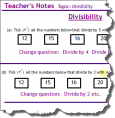
A large set of questions grouped by topic, paper, and national curriculum level Test questions are often seen as uninteresting and useful only to assess pupils summatively. This resource however allows questioning(ta) to be used to support pupils’ revision, creativity and higher order(ta) problem-solving in class. The tasks could be conducted via whole class(ta) discussion(ta) or assessment(ta), perhaps using mini-whiteboards(tool), or in small group work(ta) situations.
| |
| Assessment | Using Assessment to Raise Achievement in Maths | |

|
Learning goals; self & peer assessment; effecting questioning; marking and case studies This resource explores approaches to assessment(ta) in maths, including the sharing of learning objectives(ta), group work(ta), whole class(ta) assessment, questioning(ta) and more. Four case studies serve as useful discussion prompts to share practice(ta). This .doc version of the QCA's 'Using assessment(ta) to Raise Achievement in Maths' allows schools to select parts of the document that are most relevant to them.
| |
| Assessment | Diagnostic Questions in Maths Teaching | |

|
Using questions to probe what pupils do, and do not, understand These questions provide a useful starting point from which to think about the use of diagnostic questions(ta) for assessment(ta) for learning and whole class(ta) dialogic teaching(ta). They may be useful for teachers in their own right as sample questions, or to think about the best way to deliver feedback, use ICT tools effectively, and support learners through assessment. In this context the questions should be considered with a critical eye. Teachers might like to think about:
Teachers might take this as an opportunity to engage in sharing practice(ta) to think about how to use such questions in the classroom - perhaps using mini-whiteboards(tool) or ICT tools - and outside of them, perhaps using quiz(tool) or voting(tool) software. | |
| Astronomy | Stars in the sky: what's up? | |

|
Use a software planetarium and encourage students to think about astronomy This activity offers an opportunity for whole class(ta) discussion(ta) and questioning(ta) centred around the use of the Stellarium. It also affords good opportunities for self-directed study or homework(ta) extensions, including perhaps the use of free mobile apps(tool) (see below). There are also opportunities for some cross curricula(i) discussion of geography (navigation by stars) and history or literacy in relation to the ancient world.
| |
| Astronomy | Recreating the Big Bang | |

|
An introduction to the creation of the Universe. This presentation offers a tour of the European Organization for Nuclear Research (CERN) and explains why it is worth spending money on one experiment. It then delves into particle physics, looking at sub-atomic particles to offer analogies for what these particles are. The session focuses on whole class(ta) dialogue(ta) and higher order(ta) thinking skills as well as exploring scientific language(ta). This 4th session and the 5th are together the most theoretically complex and they present challenges to young peoples world views. As such they are led as much by their questions(ta) as by the presentation.
| |
| Astronomy | It's full of stars | |
|
|
Using a telescope and considering how those early astronomers may have worked Astronomy(topic) has been practiced for centuries and doesn't require expensive equipment! This first session aims to train the whole class(ta) to use a telescope and, hopefully, to provide an opportunity to engage in some active learning(ta). The lesson includes some naked-eye observations and describes how modern technology helps scientists know where to look. You can explore the scientific method(ta) and language(ta) at this point, using targeted questioning(ta)/differentiation(ta). Students may be able to engage in an inquiry(ta)-based project around this work, perhaps for homework(ta).
| |
| Blogs | Digital Reporters at Camp Cardboard | |
|
Children using iPads to blog about Cardboard Sculptures This activity is a cross curricula(subject) activity, involving a collaborative(tool) approach, giving children the opportunity to work together on a blog. Children were encouraged to engage in group talk(ta) and discussion(ta) in the classroom to reflect on the activity they were to report on. The activity furthers e-skills(topic) and e-safety(topic) through the use of whole class(ta) participation. The specific art activity provided a great stimulus for the blogging. Equally, however, this approach could be applied to any event in or out of school. The use of blogging and social media gave the opportunity for children to share their ideas with a wider audience, and also gave opportunities for real-time feedback to their work. The use of hand-held technology also enabled active learning(ta) as the portability of the iPads and iPods allowed them to be used outside the classroom.
| |
| CPD | Giving Oral Feedback | |

|
Developing good practice in giving oral feedback This resource discusses giving oral feedback, particularly in the context of assessment(ta), which could include whole class(ta) discussion(ta) or group talk(ta), as well as questioning(ta) contexts.
| |
| CPD | Encouraging Pupils to Ask Effective Questions | |
|
|
Getting pupils to do the questioning This resource describes some methods to encourage pupils themselves to engage in effective questioning(ta) - an active learning(ta) approach which may be useful in whole class(ta) or group work(ta) discussion(ta).
| |
| CPD | Group Work - Group Size | |

|
What size group are we in today? Thinking about group size This resource discusses group work(ta) sizes, and the practical benefits and limitations of various group sizes - from individual work to whole class(ta) work.
| |
| Consecutive Sums | Using Prime and Square Numbers - How Old Am I? | |
|
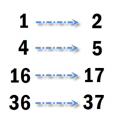
Last year I was square, but this year I am in my prime. How old am I? This short activity offers opportunity for pupils to engage in mathematical thinking(ta) and higher order(ta) problem solving/reasoning(ta). They should be able to make links between different areas of mathematics and explore their ideas in whole class(ta) discussion(ta) and questioning(ta).
| |
| Discussion | The Environment for Group Talk in Science | |

|
"Ask questions rather than provide answers: ‘What’s the strength of his or her point?’ ‘How you could check that out?’ " This resource contains a set of activities and examples to discuss and work through based around maintaining group talk(ta) in whole class(ta) and group work(ta) settings, including setting up Ground Rules, and creating appropriate environments (physical and 'class rule' based) for argumentation(ta) and discussion(ta)
| |
| Ethics | Ethical issues in human reproduction | |
|
Why does reproduction raises so many ethical issues? When does life begin? This lesson outline stimulates A-level students to engage in discussion(ta), develop their reasoning(ta) skills and increase their awareness of the bioethical(topic) issues involved in human reproduction.
Background texts and open-ended questioning(ta) about human reproduction, contraception and IVF are provided as the stimulus. Small group discussion about these topics, writing on post-it notes, and reading case studies aim to get students reasoning(ta) to justify their opinions, and to compare and evaluate competing views. Finally, whole class(ta) discussion synthesises the emerging ideas and encourages students to consider changing their positions or adding additional issues to a recording table. | |
| Force | Which material makes a good parachute? | |

|
A simple investigation into parachutes and air resistance This activity supports a number of learning types:
| |
| Force | What makes a good paper airplane? | |

|
| |
| Force | Building bridges from a piece of A4 paper | |

|
A bridge too far... This activity supports a number of learning types:
| |
| Force | What floats and what sinks | |

|
Is getting in the bath a way to lose weight? This activity supports a number of learning types:
| |
| Force | Force in the early years | |

|
Thinking about the language of force This lesson idea highlights the scientific language(ta) around the topic of force, and through group work(ta) and whole class(ta) dialogue(ta) engages pupils in inquiry(ta) and the scientific method(ta) surrounding force.
| |
| Genetics | How DNA is sequenced: the stages | |

|
The complexity and scale of genome sequencing Students match diagrams of the stages of DNA sequencing with a list of text descriptions of the process. The lesson can involve students discussing in pairs / group work(ta), followed by a teacher or student-led plenary. Students would share ideas, come to a consensus and check the ‘whole class(ta) response’ with their version. The teacher's questioning(ta) can focus on scientific method(ta) and use of scientific language(ta). The lesson idea provides opportunities for the effective use of assessment(ta).
| |
| Genetics | Human Genome Project: from Sequencing to Sharing Genomic Information | |
|
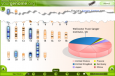
Discuss and share economic, political and ethical issues. This resource provides guidance on how to use whole class(ta) discussion(ta) and/or small group work(ta) to engage students with the science and the economic, political, ethical(topic), legal and social issues of a scientific project such as the HGP. Its focus is on the scientific method(ta); language(ta) and the nature of scientific inquiry(ta).
| |
| Graph | Variation of human characteristics - Visualising Class data | |

|
A big survey of ourselves, measuring hands, feet and more The lesson offers the opportunity to explore measurement, relationships between measurement, and ways to visualise and summarise this data. The use of ICT(i) allows the teacher to enter data and for pupils to immediately see the impact this has on the pie chart and frequency tables (which are automatically updated). This also allows the teacher to change the 'range' for the frequency counts, and discuss with pupils the impact of this on the pie chart, and whether this is a good representation - encouraging the use of mathematical language(ta) and scientific method(ta) throughout. In collecting the data pupils have opportunity for some self-directed group work(ta) - to measure various lengths as described below - and the teacher could use whole class(ta) questions(ta) to explore the strategies taken to conduct this investigation(ta).
| |
| Group talk | Organising Group Talk in Science | |
|
|
The group in which students are expected to work has a huge bearing on their willingness to speak openly. Can we better manage group talk? This resource contains activities and examples relating to group talk(ta) in science lessons in whole class(ta) and group work(ta) settings.
| |
| ICT | IT in Primary Science | |

|
A whole book of ideas for using generic ICT tools in science This book is a compendium of lesson ideas with ICT(i) as a key focus for use in inquiry(ta) based learning and the scientific method(ta). It offers opportunities for use of group work(ta) and collaboration(ta) as well as whole class(ta) questioning(ta).
| |
| ICT | IT in Secondary Science | |

|
A whole book of ideas for using generic ICT tools in science This book provides resources and lesson ideas with ICT(i) as a key focus for use in inquiry(ta) based learning and the scientific method(ta). It offers opportunities for use of group work(ta) and collaboration(ta) as well as whole class(ta) questioning(ta).
| |
| ICT | Primary Science Curriculum Activities with Sensors | |

|
A compendium of investigations with sensors in primary science This resource provides a set of activities to engage pupils in inquiry(ta) based learning in the scientific method(ta), often making effective use of ICT(i) and sensors(tool). The activities involve whole class(ta) questioning(ta) and collaborative(ta) group work(ta).
| |
| ICT | Data Logging and Control | |

|
A compendium with numerous ideas for using sensors to teach science. This book provides a set of resources and lesson ideas with ICT(i) as a key focus for use in inquiry(ta) based learning and the scientific method(ta). It offers opportunities for use of group work(ta) and collaboration(ta) as well as whole class(ta) questioning(ta).
| |
| ICT | Creating Instructional Videos | |
|
Children create instructional videos to upload to YouTube This activity is a cross-curricular(subject) activity with a literacy focus, involving a collaborative(tool) approach, giving children to opportunity to work together to produce a set of instructional resources. Children were encouraged to engage in group talk(ta) and discussion(ta) in the classroom to reflect on what they should include in their videos. The activity furthers e-skills(topic) through the use of whole class(ta) participation. It develops e-safety(topic) skills through discussion of the issues relating to posting digital content online. Children were allowed to choose their own subject for the video, although this could be set by a teacher with a specific outcome in mind, or could be tailored to cover a particular topic or subject. It could, for instance, be used to explain their mathematical thinking(ta).
| |
| ICT | Infant and Primary Science Activities with Sensors | |

|
A compendium of investigations with sensors in primary science. This is a compendium of activities to engage pupils in inquiry(ta) based learning in the scientific method(ta), often making effective use of ICT(i) and sensors(tool). The activities involve whole class(ta) questioning(ta) and collaborative(ta) group work(ta).
| |
| Literacy | Developing Language in Primary Science | |
|
|
Language development and the use of appropriate vocabulary(ta) is highlighted as important across the curriculum. Incorporating this consideration into science planning(ta) is important for meeting the target of developing language. The importance of language and talk in science – including through group work(ta), and Whole class(ta) dialogue – is highlighted elsewhere (and in the resource) but includes the ability to explain concepts, understand synthesising ideas (including those from other people and texts), and the need to read and write for different purposes, (including conceptual understanding, data presentation, etc). These are key ideas in communicating the scientific method(ta) | |
| Maps | Restless Earth | |

|
How would you respond? Using maps to model disaster support and recover exercises. This is a free workshop offered by the British Cartographic Society (BCS). Students are assigned roles for group work(ta) tasks to represent various disaster recovery agencies. Learning and teaching focuses around small group work, co-inquiry(ta), exploring ideas alongside negotiation, enquiry-based learning as well as a final whole class(ta) dialogue(ta). The overall aim of the workshop is for each group to produce a map suitable to meet the needs of the various disaster recovery agencies. BCS organise and supervise the event on the day. They run the workshops throughout the year at a variety of locations. Schools can host their own event or attend an organised one elsewhere. The only proviso is that BCS have access to a large hall with Internet available. If you would like to host or attend a Restless Earth workshop please contact the British Cartographic Society via the following link: http://www.cartography.org.uk/default.asp?contentID=982 | |
| Polygons | Exploring properties of rectangles: Perimeter and area. | |

|
Do two rectangles that have the same area also have the same perimeter? A problem to inspire higher order(ta) questioning(ta) especially in whole class(ta) dialogic teaching(ta) encouraging pupils to engage in mathematical thinking(ta) and language(ta). You could use Geogebra(tool) in this investigation, as an example of same-task group work(ta).
| |
| Populations | Populations and ecosystems | |
|
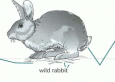
Rabbits and vegetation - a real population case study Learning objectives are met using the following approaches:
| |
| Probability | Playing with Probability - Efron's Dice | |
|
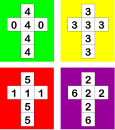
I have some dice that are coloured green, yellow, red and purple... Efron's dice provide a discussion(ta) topic for joint reasoning(ta) - whole class(ta) or in group work(ta). Pupils can explore aspects of mathematical thinking(ta) particularly with relation to probability.
| |
| QR codes | Editing Using QR Codes to Engage Children with Learning | |
|
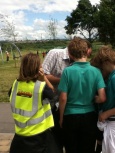
Children using digital literacy to engage with reading and writing This lesson idea uses technology to promote active learning(ta) as resources were produced to be located and explored in a public park. The early stage of the activity, involving the creation of the resources by the children, required discussion(ta) involving the whole class(ta). Group talk(ta) was also employed as a strategy, with the children agreeing on a narrative(ta) outline relating to the event. The creation of the online materials encouraged development of e-skills(topic).
The later stages of activity, where the children were looking for clues, required them to ask questions(ta) and to take a collaborative(tool) approach to find a solution, based on the digital texts they found. | |
| Simultaneous Equations | Love Food, Hate Waste - Simultaneous Equations | |

|
Using real world data to explore simultaneous equations Using a source that was not intended by its creators as a mathematical resource, pupils are introduced to informal ways of solving simultaneous equations.
The lesson starts with an intriguing ‘hook’, pupils are able to use reasoning(ta) skills to find an answer to the problem and can then, later, formalise this in an algebraic context, using their informal work to support the transition to mathematical thinking(ta). whole class(ta) work supports this inquiry(ta) into the data provided. Using a resource not targeted at mathematics specifically encourages pupils to think about maths outside of the classroom. | |
| Standard Index Form | An Introduction to the Standard Index Form | |

|
Working out the rules according to which a calculator displays large numbers The Standard Index Form is a key idea for mathematicians and scientists. The notion that we choose to write numbers in this way requires some explanation. So in this activity, pupils take part in an investigation(ta) on how standard index form works. This is a higher order(ta) problem solving context where students are encouraged to engage in mathematical thinking(ta). They may be involved in whole class(ta) or small group work(ta) discussion(ta), so they have a good opportunity to practice using mathematical language(ta) and questioning(ta).
This means that students do not need to be able to explain their ideas in full: they can use the calculator's feedback to discover whether their ideas are correct or not. This is also an exciting way for pupils to realise an initial idea that fits the data may need to be extended when new data arises. This resource therefore aims to develop investigative skills, as well as introduce pupils to standard index form in a memorable way. The pupils can later use their knowledge of indices in discussion(ta) and group talk(ta) as they explain what is happening. | |
| Statistics | Cubic Equations and Their Roots | |
|
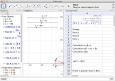
To interactiviley explore and understand complex mathematics with GeoGebra This lesson features a ‘real life’ example for students to explore using visualisation(ta) via GeoGebra. The focus on ‘real life’ increases student motivation.
The activity engages pupils in group talk(ta), mathematical thinking(ta) and vocabulary(ta). This open ended(ta) task encourages higher order(ta) thinking, and encourages whole class(ta) discussion(ta)/questioning(ta) and inquiry(ta) projects. | |
| Using images | Organising images for a narrative | |

|
Write an essay without words The lesson encourages students to think about how to portray their knowledge through narrative(ta) - which may engage some students who would usually be less interested. The lesson encourages students to think about how to capture valuable information and ensure that key elements are highlighted while not 'overloading' the viewer with data. The lesson can be tailored to any age group - for younger pupils the task could be to take before and after photos and label them. More advanced pupils might explore time-lapse photography. Pupils should be encouraged to think about how this relates to the scientific method(ta) The task is interactive and could be conducted as a group work(ta) activity or as an element of an inquiry-based learning project. It could also lend itself to whole class(ta) dialogue(ta) and the use of ICT(i) including 'clicker' response systems for assessment(ta) and questioning(ta).
| |


