Copyright: keep it legal/Resource: Difference between revisions
SimonKnight (talk | contribs) No edit summary |
SimonKnight (talk | contribs) No edit summary |
||
| (2 intermediate revisions by the same user not shown) | |||
| Line 1: | Line 1: | ||
[[Category:Reading]] | |||
= Copyright: keep it legal = | = Copyright: keep it legal = | ||
== Contents == | == Contents == | ||
| Line 149: | Line 150: | ||
This course will explicitly follow the stages of the Practitioner Research Cycle, starting with identifying needs and moving through to sharing your learning (initially within your course group). Throughout the course icons will indicate the stage of the cycle being addressed. | This course will explicitly follow the stages of the Practitioner Research Cycle, starting with identifying needs and moving through to sharing your learning (initially within your course group). Throughout the course icons will indicate the stage of the cycle being addressed. | ||
== | == Activity 1 Getting to know others == | ||
Share with colleagues: | Share with colleagues: | ||
* two or three examples of websites you normally use to find material (images, sound, video etc.) to use in the classroom, with brief explanations of why you find them useful. If you are new to searching the web don’t worry – just omit the info about the websites you normally use from your message | * two or three examples of websites you normally use to find material (images, sound, video etc.) to use in the classroom, with brief explanations of why you find them useful. If you are new to searching the web don’t worry – just omit the info about the websites you normally use from your message | ||
In your responses you might compare and contrast the sources that members of the course use. Do the differences in the sites you use reflect your different teaching interests for example? Are there sources you haven’t come across before? | In your responses you might compare and contrast the sources that members of the course use. Do the differences in the sites you use reflect your different teaching interests for example? Are there sources you haven’t come across before? | ||
= Copyright – how to stay within the law = | = Copyright – how to stay within the law = | ||
<section begin=CopyrightWithinTheLaw /> | |||
Everyone has favourite websites they use to find information. You may have found some new ones that looked very useful when you shared your sources with colleagues in Activity 1. When you use these sources to find useful-looking material, apart from making sure that it is of good quality, you also need to take account of the conditions surrounding its use. Simply being on the web does not make something freely available to use in all circumstances. Intellectual Property Rights (IPR), of which copyright is just one part (along with Patents, Designs and Trademarks) protect the creators of ideas. Materials that are in some way ‘fixed’ like text, music, pictures, sound recordings and web pages, are protected by the Copyright, Designs and Patents Act 1988 and may often have an accompanying symbol (©) and/or legal statement. | Everyone has favourite websites they use to find information. You may have found some new ones that looked very useful when you shared your sources with colleagues in Activity 1. When you use these sources to find useful-looking material, apart from making sure that it is of good quality, you also need to take account of the conditions surrounding its use. Simply being on the web does not make something freely available to use in all circumstances. Intellectual Property Rights (IPR), of which copyright is just one part (along with Patents, Designs and Trademarks) protect the creators of ideas. Materials that are in some way ‘fixed’ like text, music, pictures, sound recordings and web pages, are protected by the Copyright, Designs and Patents Act 1988 and may often have an accompanying symbol (©) and/or legal statement. | ||
| Line 163: | Line 163: | ||
In some cases, obtaining this permission results in a fee being charged and obtaining permission can be time consuming. Our focus within this course is on identifying resources that you can use free of charge and don’t need to seek further permission to use. However, in order to be able to do that you need to know a little more about copyright. | In some cases, obtaining this permission results in a fee being charged and obtaining permission can be time consuming. Our focus within this course is on identifying resources that you can use free of charge and don’t need to seek further permission to use. However, in order to be able to do that you need to know a little more about copyright. | ||
<section end=CopyrightWithinTheLaw /> | |||
== Activity 2 What can I use legally? == | == Activity 2 What can I use legally? == | ||
1 hour (online) during week one of the course | 1 hour (online) during week one of the course | ||
| Line 170: | Line 170: | ||
* develop your understanding of ownership of material you find on the web | * develop your understanding of ownership of material you find on the web | ||
* develop your knowledge of how to establish what you can and can’t legally do with resources you find on the web. | * develop your knowledge of how to establish what you can and can’t legally do with resources you find on the web. | ||
<section begin=CopyrightPractical/> | |||
Look at these examples of material, which are readily available on the web. For each item note down answers to the following question | Look at these examples of material, which are readily available on the web. For each item note down answers to the following question | ||
| Line 303: | Line 303: | ||
* What have you used or will you use in your practice? | * What have you used or will you use in your practice? | ||
* What do you still need to know? | * What do you still need to know? | ||
<section end=CopyrightPractical/> | |||
= Shared learning = | = Shared learning = | ||
Latest revision as of 13:45, 30 August 2012
Copyright: keep it legal
Contents
- Course information
- Learning outcomes
- Course schedule
- Introduction
- Introducing ourselves
- Copyright – how to stay within the law
- Creative Commons
- Creative Commons (cont.)
- Creative Commons (cont.)
- Creative Commons (cont.)
- Planning a search for material
- Finding material
- Reflection
- Shared learning
- Evaluation and certification
- References
Course information
You will need access to:
- The internet and a web browser
Duration of the course: 9.5 hours over 5 weeks
Learning outcomes
Professional and reflective practitioner skills
At the completion of this course, you should be able to
- Identify the copyright status of resources you have found on the web
- Advise colleagues about locating and using online resources legally
- Remain within copyright law in the future
- Incorporate skills for finding and using online resources legally with learners into their school and subject contexts as appropriate
Practical skills
At the completion of this course, you should be able to
- Find resources that you can use legally in your own work (for example, on a Creative Commons licence)
Knowledge and understanding
At the completion of this course, you should be able to demonstrate
- an understanding of the rights and responsibilities around re-using third party materials found on the web
Cognitive skills
At the completion of this course, you should be able to:
- make judgements about the legality of using web-based resources
Course schedule
| Course Activities | Type | Approx time needed |
| Activity 1 Getting to know others on the course | Online | 1 hour |
| Activity 2 What can I use legally? | Online | 1 hour |
| Activity 3 Unpicking copyright | Online | 1 hour |
| Activity 4 Introducing Creative Commons | Online | 1 hour |
| Activity 5 Creative Commons: using Flickr | Online | 30 minutes |
| Activity 6 Creative Commons: using Google | Online | 30 minutes |
| Activity 7 Reviewing your sources | Online | 30 minutes |
| Activity 8 Planning a search for material | Online | 30 minutes |
| Activity 9 Finding material | Online | 1 hour |
| Activity 10 Reporting back | Offline | 1 hour |
| Activity 11 Extracting our shared learning | Online | 1 hour |
| Activity 12 Course evaluation | Online | 30 minutes |
Introduction
We will begin by looking at the sources you currently use to find digital resources, and move on to the things you need to bear in mind when locating and using digital resources in the classroom, so that you do not break copyright law.
You will then plan and carry out a search for information, using the skills and knowledge you acquire.
Throughout the course, and especially after you have carried out your search, you will share your experiences with other participants on the course.
The Practitioner Research Cycle
Vital courses are based on the Practitioner Research Cycle as shown in the diagram below.

You will no doubt already be familiar with the notion of reflective practice, which typically has four stages:
- Identify needs
- Plan
- Do
- Reflect.
The Practitioner Research Cycle extends that by adding in two further stages
- Find out
- Share.
‘Find out’ involves investigating what the wider education community knows about how to address identified needs (in order to help learn from other people’s prior experience and avoid re-inventing the wheel).
In the ‘Share’ stage you pass on what you have learnt to the wider community so that they in turn can benefit from your experiences and expertise. (This is then mediated by a process of peer review before becoming an established part of the education communities’ shared knowledge base.)
This cycle draws on, and develops, personal and professional knowledge bases (Pers KB and Prof KB in the diagram). The latter is the knowledge that underlies professional practice in education, and is reflected in the literature, resources, policies and other materials that are used to inform practice.
This course will explicitly follow the stages of the Practitioner Research Cycle, starting with identifying needs and moving through to sharing your learning (initially within your course group). Throughout the course icons will indicate the stage of the cycle being addressed.
Activity 1 Getting to know others
Share with colleagues:
- two or three examples of websites you normally use to find material (images, sound, video etc.) to use in the classroom, with brief explanations of why you find them useful. If you are new to searching the web don’t worry – just omit the info about the websites you normally use from your message
In your responses you might compare and contrast the sources that members of the course use. Do the differences in the sites you use reflect your different teaching interests for example? Are there sources you haven’t come across before?
Copyright – how to stay within the law
Everyone has favourite websites they use to find information. You may have found some new ones that looked very useful when you shared your sources with colleagues in Activity 1. When you use these sources to find useful-looking material, apart from making sure that it is of good quality, you also need to take account of the conditions surrounding its use. Simply being on the web does not make something freely available to use in all circumstances. Intellectual Property Rights (IPR), of which copyright is just one part (along with Patents, Designs and Trademarks) protect the creators of ideas. Materials that are in some way ‘fixed’ like text, music, pictures, sound recordings and web pages, are protected by the Copyright, Designs and Patents Act 1988 and may often have an accompanying symbol (©) and/or legal statement.
In most circumstances, works protected by copyright can only be used – and ‘used’ can mean copied, scanned, distributed, stored, adapted, broadcasted or shown - in whole or in part with the permission of the owner. You are personally responsible if you use material without having the necessary permissions and could face prosecution and a hefty fine. You also have a moral duty to act as a good role model to the students in your care in order to help them recognise the importance of keeping legal.
In some cases, obtaining this permission results in a fee being charged and obtaining permission can be time consuming. Our focus within this course is on identifying resources that you can use free of charge and don’t need to seek further permission to use. However, in order to be able to do that you need to know a little more about copyright.
Activity 2 What can I use legally?
1 hour (online) during week one of the course
The objectives of this course activity are to
- develop your understanding of ownership of material you find on the web
- develop your knowledge of how to establish what you can and can’t legally do with resources you find on the web.
Look at these examples of material, which are readily available on the web. For each item note down answers to the following question
- What copyright information can you find out about it?
- What can you ‘do’, legally, with this information, in terms of re-using it?
- A video about combustion. http://www.tes.co.uk/teaching-resource/Secondary-Science-Using-ICT-Investigating-Combustion-with-Year-7-Using-Gas-Sensors-6084454/[1]
- An article about Uluru, including text and pictures. (use http://nature.new7wonders.com/archives/wonder/uluru )
Like printed materials or works of art, everything published on the web is protected by copyright, even if it looks as if it is ‘free’ information. The rules on copyright, which are already complicated, become more complex in an online world, because it is so easy to copy and transfer electronic information to other people.
The bottom line on copyright is that anything you find on the web, whether text, an image, video clip or piece of audio, ‘belongs’ to someone else, and you should check the copyright statement if there is one, to ascertain what you can legally do with the material.
Activity 3 Unpicking copyright
1 hour (online) during week two of the course
The objective of this course activity is to explore some of the legal guidance around copyright, and the exceptions to copyright rules.
There are exceptions to the copyright rules which allow you to do a little more with material you find within your teaching than in other contexts.
Read Intellectual Property Office guidance on permitted uses of copyrights works and advice for educational establishments. Note down any exceptions that might legally enable you to use material in your teaching without having to get permission first.
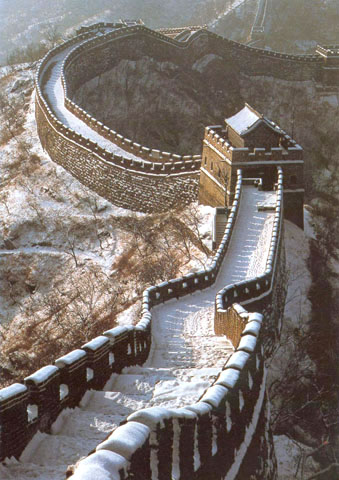
Now imagine you want to use this image of The Great Wall of China in your teaching. Drawing on your notes, come to an agreement in the course forum about the point at which using this material becomes illegal. Could you
- Show it to your students using the classroom whiteboard?
- Make paper copies of it and distribute it to pupils during a classroom exercise?
- Crop it, so that it fits nicely into the school newsletter or website?
Creative Commons
Using material you find on the web has been made easier in recent years through Creative Commons, which provides a system of licensing to enable people to share and re-use information easily.
Activity 4 Introducing Creative Commons
1 hour (online) during week two of the course
The objective of this course activity is to find out more about the Creative Commons movement.
Play this video from Creative Commons for a brief introduction.
Now look at the Creative Commons licenses; note the increasing degrees of protection they offer for the creators of material, and also what constitutes ‘use’. Note down which of the licenses are the most useful, from your point of view.
Discussion
Creative Commons extends and works alongside copyright to enable people to share their work. This works well for us as consumers of information because it expands the amount of information available for us to re-use.
Creative Commons (cont.)
Activity 5 Creative Commons: using Flickr
30 minutes (online) during week three of the course
The objective of this course activity is to demonstrate how the advanced search functionality within Flickr can help you to more easily identify images that you can re-use.
Flickr is a site for sharing photographs. The advanced search options in Flickr enable you to search within Creative Commons licensed content. You can restrict your search according to what you ultimately want to do with what you find. For example, you can search just for images that you can edit. This is a quick and easy way to ensure that you find material quickly which suits your purpose.
- Go to the Flickr website.
- Type ‘digital native’ in the search box. Note down the number of results you get. Click on some of the images, and look under ‘Additional information’ (on the right hand side of the screen to see the licence information, which details what you can legally ‘do’ with the material.
- Now try an ‘Advanced Search’. If you are viewing an individual photograph, you can get to Advanced search by clicking on ‘Search’.
If you are looking at the thumbnails of your search results, the Advanced Search option should be at the top of the screen. Scroll down the Advanced Search screen to find the Creative Commons options. Select the tick box called ‘Only search within Creative Commons licensed content’.
- Do the same search on ‘digital native’. How many items did you find this time? What you can ‘do’ with this material?
Discussion
When we did this search, there was a significant difference in the number of hits and what we were able to ‘do’ with the content we found. Restricting the search to only those items licensed under Creative Commons reduced the number of hits from 7000+ to around 1000, and what we could do with the material found was much less restrictive. However, you do need to be careful because of the different sort of Creative Commons licences, most of which do require that you give appropriate attribution for the images you use (e.g. if you are including an image in a presentation you may also have to include the url where you found the image).
Creative Commons (cont.)
Activity 6 Creative Commons: using Google
30 minutes (online) during week three of the course
The objective of this course activity is to demonstrate how the advanced search functionality within Google can help you to more easily identify material that can be re-used.
Like Flickr, Google’s advanced search options enable you to filter your results according to what you ultimately want to do with what you find.
- Go to the Google Images website.
- Search for material on a topic of your choosing. Write down the search term that you are going to use.
- Now select ‘Advanced search’. Under ‘Usage rights’, note the range of options in the drop-down menu for restricting your search.
- Carry out the same search (using the same search term) but restricting it to items ‘labeled for reuse’.
Click on a few of the items to look at what you can do with the material.
Discussion
Searching in this way is a good idea in two respects – it reduces the number of items you have to deal with and ensures that you get material which you can reuse. For example, when we did this search, using the word ‘fish’, and restricting the results to those ‘labeled for reuse’, we were able to reduce the hits on Google images from over 104 million to a more much manageable 500.
Creative Commons (cont.)
Activity 7 Reviewing your sources
30 minutes (online) during week three of the course
When looking for material to use in the classroom, using ‘reliable, high quality’ sites to start with can take some of the guesswork out of finding resources that can be re-used legally. The objective of this course activity is to revisit the sites you normally use, and review them to see whether they are good sources of legal-to-use information.
Go to the sites that you normally use as sources of material (or choose ones that other people shared in the forum during Activity 1). Note down any information about the copyright associated with those sites. To what extent can you legally use material from them?
Planning a search for material
Now that we’ve looked at ways of searching for material which can be legally re-used in the classroom, let’s bring it all together and plan a search on a topic.
Activity 8 Planning a search for material
30 minutes (online) during week three of the course
The objective of this course activity is to plan a search for material you can legally use in the classroom.
Jot down some brief responses to each of these questions
- What format of material are you looking for (e.g. images, video, text)?
- In the light of your answer to (1) where might be a good place to search (e.g. one of the known reliable sites that you agreed upon in Activity 7, or further afield on the broader web e.g. Google, Flickr)?
- What do you want to do with the items you find, e.g. are you amending an item, displaying it, distributing it?
- What will you need to look for when you have found material? e.g. Which Creative Commons Licence best fits your requirements from (2)?
- How do your answers to (3) and (4) impact on the parameters to set for your search?
Finding material
Having planned a search for a topic, you now need to carry it out.
Activity 9 Finding material
1 hour (online) during week four of the course
The objectives of this course activity are to
- carry out a search for material that you intend to re-use in your teaching
- consolidate learning by putting into practice the principles learned about finding digital resources you can re-use.
Carry out your plan from Activity 8. Use this File:Search record.doc to keep track of the sources you use, and the material you find, and most importantly, any restrictions on its use. Note down any reflections on how you went about your search, in particular, any pitfalls or useful tips you discovered.
Reflection
Having planned and carried out your search, you will now think about what worked well, and what didn’t.
Activity 10 Reflect on your own learning
1 hour (online) during week four of the course
The objectives of this course activity are to
- identify what you have learned through the activities and discussion you have taken part in during this course
- consider what changes to your practice you might make
- identify what will be of use to you in your practice.
Reflect on the process of finding information, both in the activity you have just done and throughout the course, and make some notes about each of the following
- What worked, what didn’t? What would you do differently next time?
- What have you used or will you use in your practice?
- What do you still need to know?
The practitioner research cycle is based on sharing your experiences and expertise in order to developing the professional knowledge base. Having reflected individually upon your own learning within this course the next stage is to share these reflections within the course group and see what commonalities there are in what each of you has learnt. You may then want to share these insights more widely within the community.
1 hour online during the fifth, and final, week of the course.
The objectives of this course activity are to discuss and agree what you have learnt as a group.
Go to the course forum and, in the Discussion called ‘Shared Learning’, post a message in which you summarise the key learning points that have emerged for you during the course (from Activity 10). Then read through the key learning points that other members of the course have posted.In your group come to an agreement about ONE combined set of key learning points which you are all agreed upon.
References
- BloggersBase ‘Terms of use’ http://www.bloggersbase.com/ tos/ #copyrights Accessed Feb 2010
- BloggersBase (2009) ‘Uluru – a natural icon’ http://www.bloggersbase.com/ travel/ uluru-a-natural-icon/ Accessed Feb 2010
- Creative Commons ‘A Shared Culture’ http://www.youtube.com Accessed Feb 2010
- Creative Commons ‘About licenses’ http://creativecommons.org/ about/ licenses Accessed Feb 2010
- Intellectual Property Office ‘Permitted uses of copyright works’ http://www.ipo.gov.uk/ types/ copy/ c-other/ c-exception.htm Accessed March 2010
- Intellectual Property Office ‘Teaching in educational establishments’ http://www.ipo.gov.uk/ types/ copy/ c-other/ c-exception/ c-exception-teaching.htm Accessed Feb 2010
- Teachers.tv (2010) ‘Hard To Teach - Secondary Science Using ICT: Investigating Combustion with Year 7 Using Gas Sensors’ http://www.teachers.tv/ video/ 45811 Accessed Feb 2010
- Teachers.tv ‘How can I use this video?’ http://www.teachers.tv/ video/ licence/ 45811 Accessed Feb 2010
- Teachers.tv ‘Terms of use’ http://www.teachers.tv/ termsofuse
Other materials included in this unit are derived from content originated at the Open University Finding information in education
Finding information in information technology and computing.