Data Logging and Control: Difference between revisions
m (Adding attribution) |
m (subjects, ages, types) |
||
| Line 1: | Line 1: | ||
{{Rinfo | {{Rinfo | ||
|type= Lesson idea | |||
|attribution={{RogerFrost}} | |attribution={{RogerFrost}} | ||
|title=Data Logging and Control | |title=Data Logging and Control | ||
| Line 6: | Line 8: | ||
|subject=Science | |subject=Science | ||
|resourcenumber=SC0052 | |resourcenumber=SC0052 | ||
|age= Secondary age 11-16 | |age= Secondary age 11-16, Secondary | ||
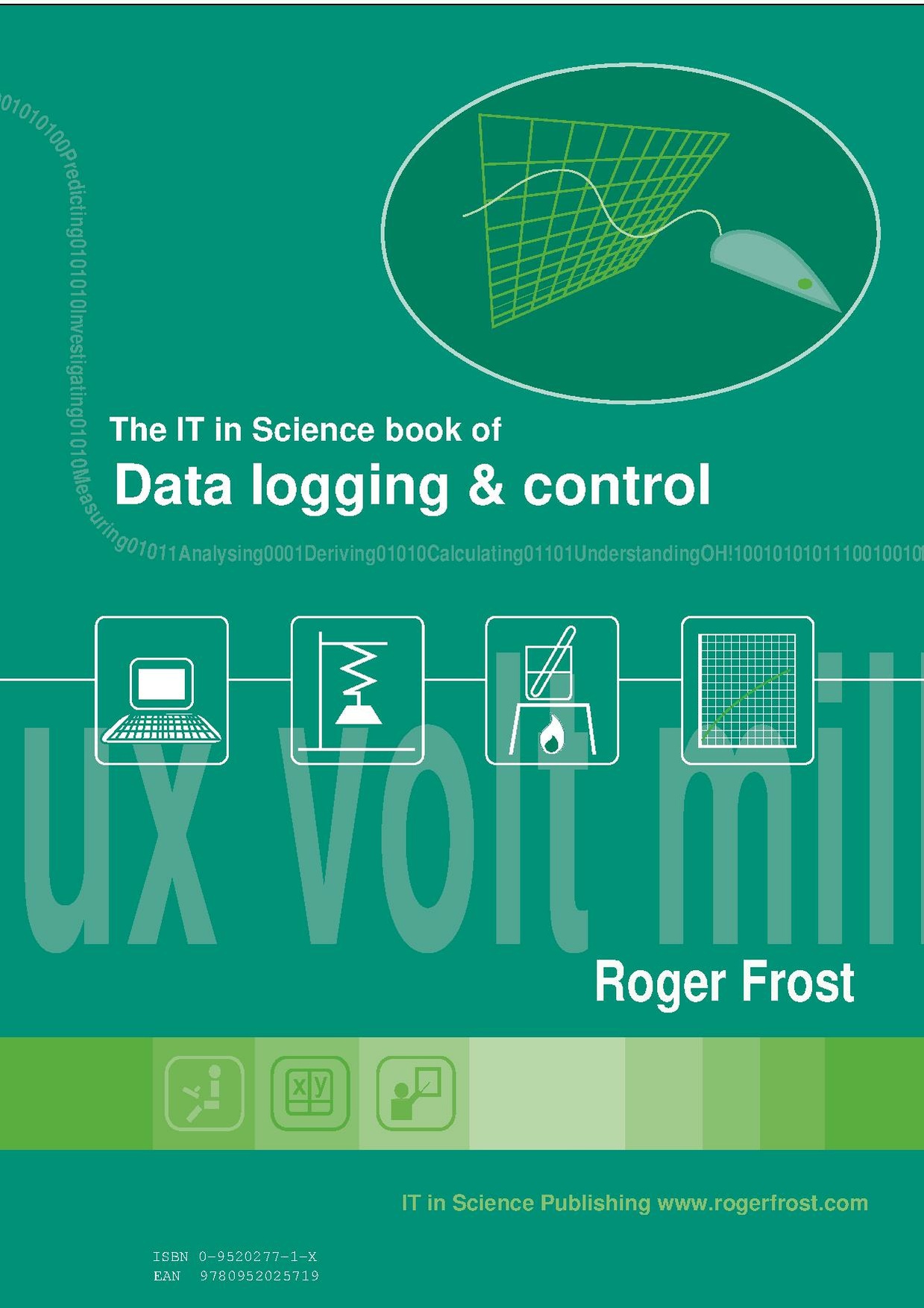
|content=A book of ideas showing the scope for using sensors to measure in science. Drawing on many sources, it catalogues the sensors available and suggests what they might be used for. There are not only classic and novel school experiments, there are ideas to investigate, such as ‘which fabric keeps us warmest?’ Though this manual appeared at a time when teachers were asking ‘what do I use the technology for’, it also aimed to show how sensors could enhance science teaching. Some of the ideas from this book are collected on [[Data_logging_ideas|our page with data logging ideas]]. | |content=A book of ideas showing the scope for using sensors to measure in science. Drawing on many sources, it catalogues the sensors available and suggests what they might be used for. There are not only classic and novel school experiments, there are ideas to investigate, such as ‘which fabric keeps us warmest?’ Though this manual appeared at a time when teachers were asking ‘what do I use the technology for’, it also aimed to show how sensors could enhance science teaching. Some of the ideas from this book are collected on [[Data_logging_ideas|our page with data logging ideas]]. | ||
|strategy= | |strategy= | ||
Revision as of 15:14, 28 September 2012

Lesson idea. A book of ideas showing the scope for using sensors to measure in science. Drawing on many sources, it catalogues the sensors available and suggests what they might be used for. There are not only classic and novel school experiments, there are ideas to investigate, such as ‘which fabric keeps us warmest?’ Though this manual appeared at a time when teachers were asking ‘what do I use the technology for’, it also aimed to show how sensors could enhance science teaching. Some of the ideas from this book are collected on our page with data logging ideas.
Teaching approach. This book provides a set of resources and lesson ideas with ICT(i) as a key focus for use in inquiry(ta) based learning and the scientific method(ta). It offers opportunities for use of group work(ta) and collaboration(ta) as well as whole class(ta) questioning(ta). (edit)
| Resource details | |
| Title | Data Logging and Control |
| Topic | [[Topics/ICT|ICT]] |
| Teaching approach | [[Teaching Approaches/Questioning|Questioning]], [[Teaching Approaches/Whole class|Whole class]], [[Teaching Approaches/Group work|Group work]], [[Teaching Approaches/Inquiry|Inquiry]], [[Teaching Approaches/Collaboration|Collaboration]], [[Teaching Approaches/Scientific method|Scientific method]] |
| Learning Objectives | Typically using sensors leads to situations where the following can become part of the culture
|
| Format / structure | Online book - licensed to ORBIT |
| Subject | [[Resources/Science|Science]] |
| Age of students / grade | [[Resources/Secondary|Secondary]], [[Resources/KS4|KS4]], [[Resources/KS3|KS3]]
|
| Useful information | Book data: ISBN 095202571X 132pp spiral bound. First published 1993 revised x 11 to 2004. Copies 9,000. Price £16.50. |
| Related ORBIT Wiki Resources | |
| Files and resources to view and download | The resource is available in a number of formats
|
| Acknowledgement | This resource was created by Roger Frost, and is under the ORBIT's CC licence. |


This resource was created by Roger Frost, and is under the ORBIT's CC licence.


